
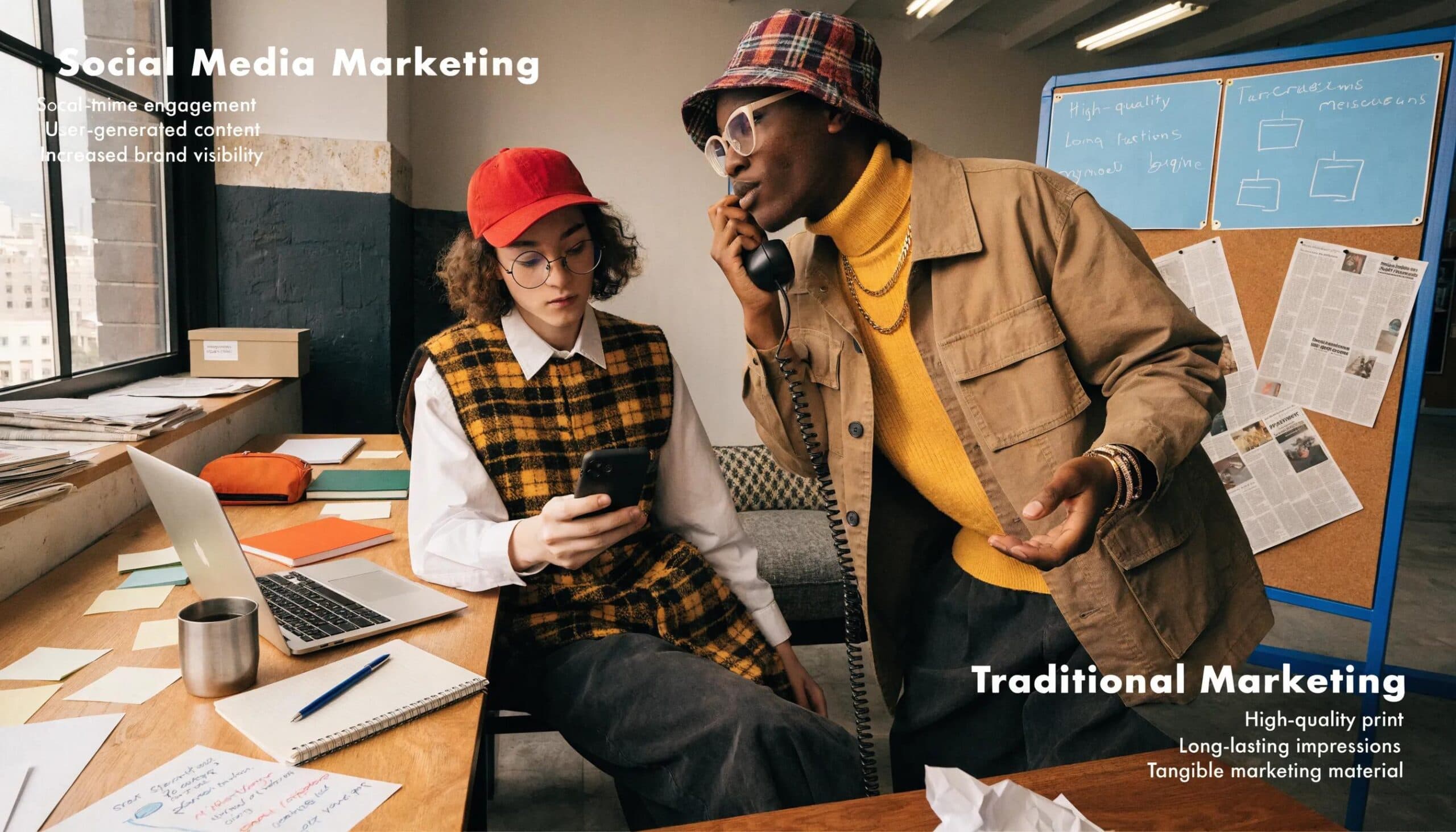

Social Media Marketing vs Traditional Marketing: Key Differences
By Justin Gray, Social Marketing Labs LLC
In today’s rapidly evolving marketing landscape, the distinction between social media marketing and traditional marketing is crucial for businesses seeking to enhance their reach and engagement. This article delves into the key differences between these two methodologies, illustrating how they each function and the unique advantages they offer. Social media marketing leverages platforms that connect directly with consumers in real-time, while traditional marketing relies on established channels such as television and print media. Understanding these differences will empower businesses, particularly small to medium-sized enterprises, to make informed decisions regarding their marketing strategies.
This discussion will explore various key areas, including the core differences between social media and traditional marketing, the effectiveness of various strategies, cost comparisons, and the benefits of integrating artificial intelligence (AI) into marketing efforts. As we dissect these topics, readers will gain insights into maximizing their marketing investments for sustainable growth.
What Are the Core Differences Between Social Media Marketing and Traditional Marketing?
Social media marketing and traditional marketing differ fundamentally in several dimensions, including engagement, cost-effectiveness, and measurement metrics. While traditional marketing often involves a one-way communication approach through channels like print and television, social media encourages two-way interactions, fostering greater consumer engagement. Moreover, social media platforms allow for real-time analytics, enabling marketers to adjust campaigns almost instantaneously, which is not always feasible with traditional methods.
Social media marketing typically incurs lower costs compared to traditional marketing channels. For instance, engaging campaigns on platforms like Facebook or Instagram can be launched with a modest budget, making them accessible for small businesses. In contrast, traditional advertising often involves substantial expenses for production and placement. These distinctions are vital for businesses aiming to allocate their budgets effectively.
How Do Social Media and Traditional Marketing Strategies Differ in Approach?
The strategies employed in social media marketing significantly differ from those in traditional marketing. Social media marketing relies on targeted ads and engaging content that resonate with specific audiences. Understanding the audience is crucial; marketers utilize data analytics to segment their audiences and tailor messages accordingly.
Conversely, traditional marketing approaches often take a broader stroke, relying on mass media to reach a large demographic without the ability to customize content for specific segments. This fundamental strategic difference underlines the flexibility and adaptability afforded by social media marketing.
Which Marketing Channels Fit Small to Medium Businesses Best?
Small to medium-sized businesses (SMBs) benefit immensely from utilizing social media marketing channels. These platforms, such as Instagram, Facebook, and Twitter, allow SMBs to create potent marketing campaigns without the exorbitant costs associated with traditional advertising.
The access to global audiences through these channels enhances targeting capabilities significantly. With targeted advertising, businesses can reach niche markets more effectively, increasing their chances of engagement and conversion. This accessibility makes social media an ideal choice for SMBs looking to maximize their marketing effectiveness while remaining budget-conscious.
What Are the Benefits of Digital Marketing Over Traditional Marketing?
Digital marketing offers several advantages over traditional marketing, particularly in terms of cost savings, targeting capabilities, and adaptability. One significant benefit is the immediacy with which marketers can engage with their audiences. Digital campaigns can be deployed quickly, allowing for rapid adjustments based on customer feedback and market trends.
Moreover, digital marketing enables precise audience targeting. Tools provided by social media platforms allow advertisers to reach specific demographics, improving the odds of higher engagement rates. This data-driven approach fosters a level of flexibility and responsiveness that traditional marketing cannot match.
How Does Social Media Marketing Improve Cost Efficiency Compared to Traditional Advertising?

Social media marketing enhances cost efficiency through lower overhead costs and more transparent metrics for assessing return on investment (ROI). Advertising on social networks like Facebook or Google allows businesses to set budgets that can be adjusted based on performance.
Real-time analytics provide insights into customer behaviors and campaign efficacy, enabling marketers to optimize their strategies continually. This capacity for adjustment not only saves costs but also ensures that marketing efforts yield the best possible outcomes.
Why Does Social Media Marketing Deliver Greater Audience Reach and Engagement?

The unique characteristics of social media platforms facilitate a broader audience reach and higher engagement levels compared to traditional marketing methods. With billions of users engaging daily, platforms like Instagram and Facebook allow businesses to connect directly with a vast audience. For businesses looking to amplify their presence, understanding how to implement effective campaigns is key. Many find that exploring specialized resources can provide valuable insights and even direct support.
The nature of social media encourages user interaction through comments, shares, and likes, fostering a sense of community around brands. This dynamic environment enhances customer loyalty and engagement in ways that traditional channels often struggle to replicate.
How Do Costs Compare Between Social Media and Traditional Marketing?
When comparing costs, social media marketing often emerges as more economical. The ability to launch campaigns with minimal investment is a significant advantage for many businesses. For example, social media ads can cost as little as $1 to $3 per click, while traditional advertising methods may require substantial upfront investments in production and airtime.
What Are Typical Social Media Advertising Costs for Small Businesses in 2026?
In 2026, small businesses can expect social media advertising costs to range from $1 to $3 per click or $5 to $10 per 1,000 impressions. These cost efficiencies highlight social media as a favorable choice for SMBs with limited marketing budgets.
How Do Traditional Marketing Expenses Impact ROI and Budget Planning?
Traditional marketing expenses can significantly impact the overall ROI and budget planning for businesses. The higher cost associated with traditional methods often results in a longer timeline for recuperating these investments. Furthermore, the lack of robust tracking metrics in traditional advertising makes it difficult for businesses to assess the success of their campaigns accurately.
Effective budget planning necessitates a thorough understanding of the cost versus benefit of each marketing channel, and many organizations find that traditional marketing does not deliver the same level of measurable return as digital options.
Which Marketing Channels Are More Effective for Audience Targeting and ROI?
In the context of audience targeting and ROI, digital marketing channels tend to outperform traditional ones. Digital platforms provide businesses with extensive data analytics tools that enable precise tracking of customer engagement and behavior, which informs more effective targeting strategies.
Utilizing advanced segmentation techniques facilitates reaching specific audiences more efficiently than traditional advertising methods. As a result, businesses can expect more significant returns on their advertising investments through these targeted strategies.
How Does AI-Driven Social Media Marketing Enhance Campaign Optimization?
AI-driven social media marketing significantly enhances campaign optimization by employing algorithms that analyze user data to refine targeting and engagement strategies. Marketers can create highly personalized content that resonates with specific audience segments, resulting in improved performance rates.
Through automation, AI helps manage campaigns, analyze their performance in real time, and adjust them for optimal results. This capability not only enhances productivity but also ensures that marketing budgets are allocated effectively.
What Role Does Data-Driven Audience Segmentation Play in Marketing Success?
Data-driven audience segmentation is vital for achieving marketing success, enabling businesses to tailor their messages and campaigns to specific customer needs. By analyzing customer demographics, behaviors, and preferences, marketers can craft compelling content that resonates with targeted groups.
Effective segmentation increases the likelihood of engagement, conversion, and overall success. Implementing a robust data-driven strategy can help businesses identify high-value customer segments and tailor their offerings to meet these audiences’ unique needs.
How Can Small to Medium Businesses Leverage AI in Social Media Marketing for Sustainable Growth?
Small to medium-sized businesses can leverage AI technologies in social media marketing to foster sustainable growth through enhanced operational efficiency. By employing AI-powered tools, businesses can streamline their marketing processes, from content creation to audience analytics.
AI-driven insights enable SMBs to understand customer preferences better, tailor their marketing messages accordingly, and ultimately drive better engagement and sales outcomes. This approach facilitates not only short-term growth but also long-term sustainability in a competitive market.
What Features Do AI Marketing Platforms Offer to Boost Revenue Systems?
AI marketing platforms offer various features designed to enhance revenue systems through improved audience targeting, automated content creation, and advanced analytics capabilities. Businesses can benefit from features including:
- Predictive Analytics: Anticipate customer behavior to tailor marketing strategies effectively.
- Automated Customer Engagement: Engage customers through personalized content based on their preferences.
- Content Generation Tools: Create high-quality content swiftly to maintain active engagement with audiences.
These features illustrate how AI can revolutionize marketing processes and facilitate increased revenue generation.
How Does AI Automation Reduce Marketing Costs and Improve Efficiency?
AI automation significantly reduces marketing costs and enhances efficiency by streamlining various marketing processes. Routine tasks, such as ad placement and performance tracking, can be automated, allowing teams to focus on more strategic initiatives.
By optimizing spending and improving targeting accuracy, AI helps businesses ensure that their marketing budgets are used effectively. This automation ultimately leads to higher productivity and better ROI for marketing campaigns.
What Are the Long-Term Advantages of Social Media Marketing Compared to Traditional Methods?
The long-term advantages of social media marketing compared to traditional methods include enhanced adaptability, community building, and cost-effectiveness. As consumer preferences shift and evolve, social media allows for quick adjustments to marketing strategies, ensuring relevancy in a competitive landscape.
Furthermore, social media fosters community and brand loyalty through direct engagement with customers, leading to long-standing relationships and repeat business. This contrasts with traditional methods that may offer limited opportunities for ongoing customer interaction and feedback.
How Does Social Media Marketing Support Scalable and Sustainable Growth?
Social media marketing supports scalable and sustainable growth by providing businesses with the tools needed to build lasting customer relationships. Leveraging data-driven insights allows for continuous improvement in marketing strategies and customer engagement efforts.
Additionally, the cost-effectiveness of social media advertising enables businesses to efficiently allocate resources towards expanding their reach and optimizing marketing efforts, thereby fostering long-term growth.
Why Is Social Media Marketing Preferred for Future Marketing Trends in 2026?
As we move deeper into 2026, social media marketing is expected to gain further traction as a preferred method due to anticipated advancements in AI and automation, changes in consumer behavior, and the emergence of new platforms. The ongoing evolution of digital technology will make social media an indispensable tool for engaging with audiences effectively.
Businesses that embrace these trends are likely to secure a competitive advantage by remaining ahead of the curve and adapting their marketing strategies accordingly.

justin
Contributor