
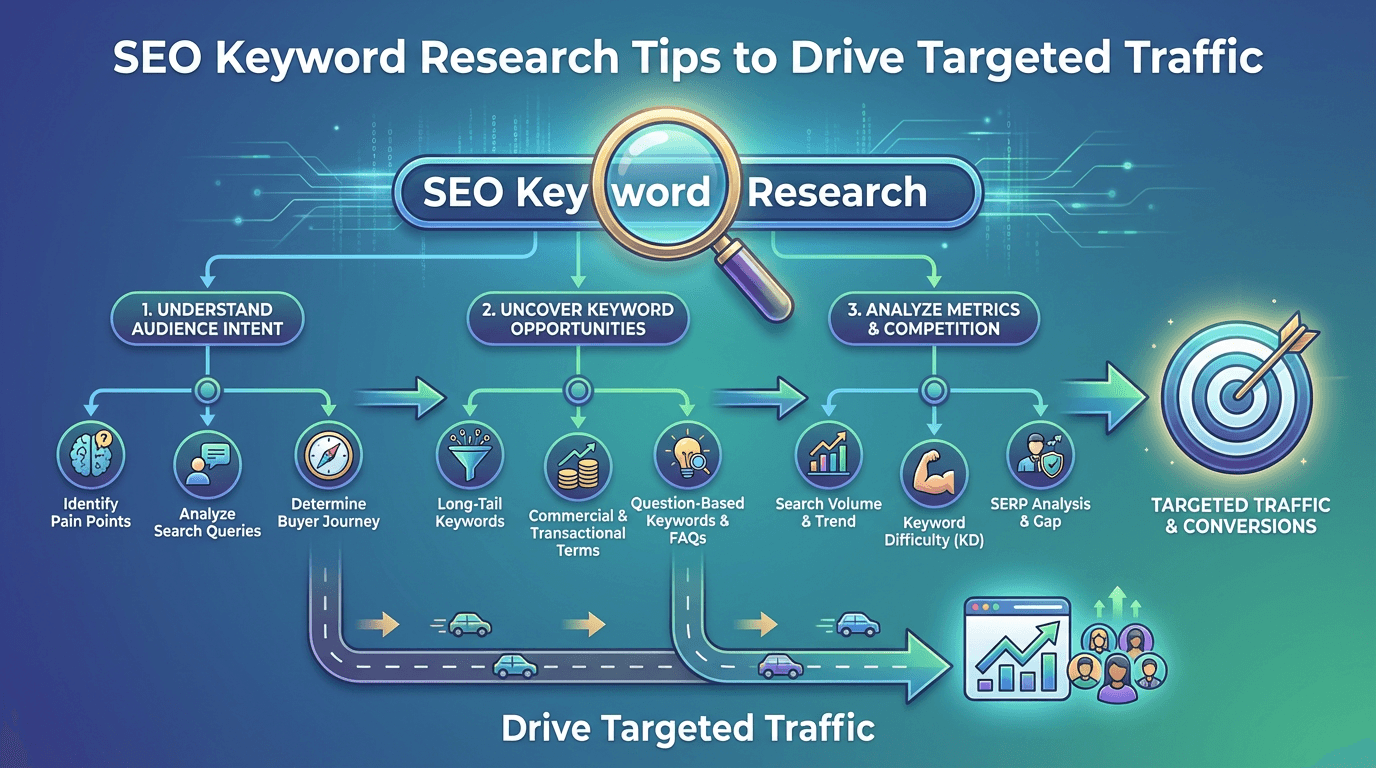
AI SEO Services, SEO Keyword Research, and SEO Marketing Strategy for Effective Online Growth
In today’s competitive digital landscape, businesses must harness innovative technologies to stay ahead. AI SEO services combine machine learning with search engine optimization (SEO), enabling faster, more precise keyword research, improved content optimization, and higher organic visibility. Companies leverage AI-driven platforms to streamline both technical and creative aspects of SEO marketing. This article provides practical insights into AI-powered keyword research and marketing strategies, explains core components of AI SEO services, and highlights how these tools deliver measurable benefits such as competitive advantage, enhanced user experience, and improved search rankings.
What Are AI SEO Services and How Do They Enhance Keyword Research?
AI SEO services integrate artificial intelligence and machine learning into traditional SEO practices. By processing vast amounts of data in real time, these services uncover new keyword opportunities quickly and accurately. Automating routine analysis allows for better predictions of keyword trends and user behavior, enabling businesses to align content strategies with current market demands.
How Does AI Improve SEO Keyword Research Accuracy and Speed?
AI leverages advanced algorithms to analyze search patterns, competition, and semantic relationships. By processing historical search data, user behavior, and competitor tactics, AI platforms quickly identify emerging long-tail keywords and niche terms—tasks that would otherwise require weeks of manual research. Continuous learning from data inputs refines accuracy, giving marketers a timely understanding of user intent for more effective content creation and on-site optimization.
What Are the Best AI-Powered Keyword Research Tools Available?
Tools such as Semrush Alternative solutions, Moz Pro, IBM Watson-powered platforms, and integrations with HubSpot use natural language processing, deep learning, and big data analytics. For example, Semrush’s advanced algorithms provide detailed competitive analysis and suggest variations by analyzing search volume, cost per click, and difficulty levels. Moz Pro and similar tools also evaluate linking metrics and backlink quality. Combining data from diverse sources gives marketers a holistic view—from short-tail to long-tail queries—for tailored strategies that meet both user intent and search engine requirements.
How Can AI Identify Valuable Long-Tail Keywords for Your Business?
By employing semantic analysis and pattern recognition, AI identifies long-tail keywords that are highly specific to user searches. Although these keywords may have lower search volume, they typically yield higher conversion potential. AI tools analyze historical queries, variations, and contextual usage across websites, and use social media trends and web analytics to pinpoint niche topics. This refined research not only improves keyword selection but also enhances content strategy by addressing specific user questions and needs.
How Does AI Support Competitor Analysis in SEO?
AI streamlines competitor analysis by gathering data on rival websites and marketing strategies. It tracks keyword usage, backlink profiles, content structure, and user engagement metrics, comparing these with one’s own performance to identify gaps and opportunities. Detailed reports reveal which keywords competitors excel in, their link-building tactics, and on-page optimization strategies, allowing businesses to adjust their methods to boost domain authority and organic reach. This continuous, adaptive analysis keeps companies agile in a changing market.
How to Develop an Effective SEO Marketing Strategy Using AI Insights?
An effective SEO marketing strategy using AI combines data-driven research, content optimization, and technical improvements. AI tools process large datasets, simulate competitor environments, and provide predictive analysis that shapes campaigns aligned with business objectives. Using these insights, marketers can target the right keywords, structure campaigns to increase user engagement, lower bounce rates, and drive conversions—resulting in improved resource allocation and higher return on investment.
What Are the Key Components of an AI-Driven SEO Marketing Strategy?
An AI-driven strategy comprises: • Automated keyword research to spot trending topics and valuable search terms in real time.
• Competitor analysis using AI to reveal rivals’ strengths, weaknesses, and market gaps.
• Content optimization through semantic analysis to align webpages with user intent and search engine requirements.
• Performance tracking with AI-driven dashboards that monitor metrics like click-through and bounce rates, enabling continuous adjustments.
The integration of these components creates a scalable and adaptable approach, essential for staying competitive.
How Can AI Help Optimize Technical SEO for Better Rankings?
AI automates technical SEO tasks that once required significant manual intervention. It identifies broken links, optimizes meta tags and descriptions, and ensures website architecture adheres to indexing best practices. In addition, AI tools analyze page load speed, mobile optimization, and structured data, all critical for search engine rankings. Ongoing monitoring and recommendations—such as fixing duplicate content and adjusting internal linking—improve a site’s crawlability and user experience.
How Do You Measure and Track the Success of AI SEO Strategies?
Measuring AI SEO success involves setting clear Key Performance Indicators (KPIs) like organic traffic, conversion rates, rankings, and click-through rates. AI tools aggregate data from sources like Google Analytics and Bing Webmaster Tools into comprehensive reports. They also incorporate sentiment analysis and user feedback for qualitative insights. Regular monitoring and A/B testing help marketers adjust strategies in response to performance trends and anomalies, ensuring that the campaign remains effective over time.
What Is SEO Keyword Research and Why Is It Critical for SEO Success?
SEO keyword research uses search terms entered by users to guide content creation and overall SEO strategy. It is crucial because it directly affects website visibility, traffic quality, and conversion rates. Without focused keyword research, sites risk attracting irrelevant visitors, leading to lower engagement and ROI. Effective research enables businesses to develop content that matches user queries, resulting in more meaningful engagement and higher rankings.
How to Conduct SEO Keyword Research Using AI Tools?
Using AI tools for keyword research involves inputting seed keywords and having the system expand them into comprehensive lists of both short-tail and long-tail keywords. These tools assess search volume, difficulty, and relevance while performing semantic context analysis to ensure keyword selection closely aligns with user intent. This automated process saves time and provides actionable insights that inform content strategies for better visibility and ranking.
What Are the Differences Between Short-Tail and Long-Tail Keywords?
Short-tail keywords are broad (e.g., “SEO tools” or “digital marketing”) and have high search volume but fierce competition. Long-tail keywords are more specific (e.g., “best AI SEO keyword research tool”) with lower volume but typically higher conversion rates due to targeted intent. AI tools differentiate between these types by analyzing search patterns and user behavior, enabling marketers to balance broad reach with effective targeting.
How to Use Keyword Research to Target User Search Intent Effectively?
Effective keyword research aligns content with the needs and behaviors of the target audience. AI determines whether users seek information, products, or services, allowing marketers to structure content accordingly. For instance, informational queries may call for guides and tutorials, while transactional queries require clear calls-to-action. Mapping keywords to each stage of the customer journey increases engagement, lowers bounce rates, and boosts conversions.
How Does AI-Powered Content Optimization Improve SEO Performance?
AI-powered content optimization enhances digital content by refining quality, relevance, and structure through semantic analysis and data-driven insights. Advanced tools scrutinize existing content, identify gaps, and suggest modifications—such as updating meta descriptions, header tags, and internal linking—to better align with target keywords and user intent. This optimization ensures content remains visible amid algorithm updates and improves both dwell time and overall authority.
What Are AI Content Creation Tools and Their Benefits?
AI content creation tools assist marketers by generating high-quality content for blogs, social media, and product descriptions using natural language processing and machine learning. Benefits include faster content production, reduced manual editing, and the ability to tailor material based on real-time analytics. These platforms often feature topic suggestions, sentiment analysis, and readability scoring, which are particularly useful for companies that need to maintain a steady, optimized content output under tight deadlines.
How to Optimize Content for Semantic Relevance Using AI?
To achieve semantic relevance, AI tools analyze keyword relationships and context to ensure that content addresses user queries comprehensively. They review structure, keyword density, and provide recommendations such as eliminating redundant phrases or adding supportive keywords. Techniques like Latent Semantic Indexing (LSI) help create interconnected content that improves both clarity for readers and ranking signals for search engines.
How Can AI Analyze and Improve Content Performance?
AI measures content performance by tracking user engagement metrics including dwell time, bounce rates, and click-through rates. It then offers targeted recommendations—such as restructuring headings, optimizing meta tags, or improving internal links—to enhance performance. Predictive analytics further inform potential improvements, allowing marketers to adjust content proactively in response to evolving search engine algorithms.
What Are the Latest Trends and Benefits of Using AI in SEO Marketing?
Recent trends in AI for SEO include advances in natural language processing, increased automation in technical audits, and deeper integration of big data analytics. AI’s ability to understand context and sentiment enables more personalized search results and a better overall customer experience. Predictive SEO and voice search optimization are also emerging trends that help marketers adjust strategies in near real time, streamline workflows, and allocate resources more efficiently.
How Is AI Transforming the SEO Industry and Market Growth?
AI is transforming SEO by automating routine tasks and providing a comprehensive view of digital marketing performance. By interpreting user queries and evaluating content more accurately, AI fosters personalized search responses and contextually relevant content. Companies that adopt AI in their strategies report improved visibility, higher conversion rates, and enhanced productivity—elements that contribute significantly to market growth.
What Are the Advantages of Data-Driven SEO Strategies With AI?
Data-driven SEO strategies powered by AI offer enhanced targeting and improved keyword research accuracy. AI’s ability to generate actionable insights from massive data sets means marketers can optimize content and technical elements more effectively, reduce inefficiencies, and monitor campaigns in real time. This leads to superior customer experience, better ROI, and more sustainable organic growth.
How Do AI SEO Services Scale With Changing Market Conditions?
AI SEO services adapt to market fluctuations by recalibrating keyword strategies and content optimizations in real time. Scalable AI platforms integrate new data sources and update predictive models with minimal downtime, allowing businesses to remain agile. This dynamic responsiveness enables companies to adjust their marketing strategies according to budget changes, technological developments, and shifting consumer expectations.
How to Choose the Right AI SEO Service Provider for Your Business?
Selecting an AI SEO service provider involves evaluating their technology, expertise, and track record. Key factors include real-time data analysis, comprehensive reporting, transparent pricing, scalable solutions, and customization options. Providers with proven success, detailed case studies, and strong customer support offer added value, ensuring seamless integration into existing marketing systems.
What Unique Value Propositions Should You Look for in AI SEO Services?
When choosing an AI SEO provider, look for advanced machine learning algorithms that deliver deep insights into user behavior, robust competitor analysis, and real-time performance dashboards. Integration with tools like Google Analytics and Search Console, along with customization options and data security measures, are also essential. These features ensure the service is scalable and tailored to your business requirements.
How to Evaluate AI SEO Tools and Services Effectiveness?
Evaluate AI SEO effectiveness by comparing key metrics—such as organic traffic, rankings, conversions, and ROI—before and after implementation. Look for solutions that offer advanced reporting features, trial periods, and client testimonials or independent audits. Regular software updates and adaptive machine learning models further indicate a tool’s ongoing effectiveness in aligning with current search engine algorithms.
What Case Studies Demonstrate Successful AI SEO Implementations?
Numerous case studies highlight significant improvements using AI SEO services. For example, some companies have reported increases in organic traffic by over 40% and improvements in click-through rates of more than 20%. Case studies from mid-sized e-commerce firms and B2B software providers reveal that automating technical audits and content optimization with AI not only boosts conversion rates but also frees up resources for creative content development.
What Are Common Questions About AI SEO Services, Keyword Research, and Marketing Strategy?
This section addresses frequent queries regarding the implementation, benefits, and integration of AI SEO services into broader digital marketing strategies, providing actionable answers based on real-world examples and industry best practices.
What Is AI SEO and How Does It Work?
AI SEO uses technologies like machine learning and natural language processing to automate and enhance traditional SEO practices. It analyzes large datasets to identify keyword trends and user behaviors, dynamically adjusting strategies to ensure alignment with search engine algorithms. Continuous learning models enable AI to refine recommendations over time.
How Does AI Help With Keyword Research and Competitor Analysis?
AI automates the collection and analysis of data for keyword research and competitor analysis. By identifying semantic patterns and mapping competitor tactics, AI-generated reports provide insights on keyword difficulty, search volume, and gaps in backlink profiles. This comprehensive approach supports more targeted and effective marketing strategies.
What Are the Best Practices for Creating an AI-Driven SEO Strategy?
Best practices include integrating advanced keyword research tools, establishing continuous monitoring through AI dashboards, and aligning all digital assets with user intent. Regular audits and cross-functional collaboration among analysts, content creators, and technical teams help ensure that insights from AI translate into actionable marketing improvements.
How Can Businesses Measure ROI From AI SEO Services?
Businesses can measure ROI by tracking improvements in organic traffic, conversion rates, and overall revenue. Detailed analytics and A/B testing help validate the benefits of AI-enhanced strategies by comparing pre- and post-implementation performance, directly linking AI efforts to revenue growth.
Table: Comparison of AI SEO Tools and Their Features
Before diving deeper, consider the following table summarizing key attributes among popular AI SEO tools:
Final Thoughts
The integration of AI in SEO services is reshaping online marketing. Enhanced keyword research, streamlined technical optimization, and data-driven content strategies lead to higher organic traffic, improved search rankings, and increased conversions. Embracing AI-powered SEO is essential for businesses aiming to secure a competitive edge and achieve long-term success through innovation and continuous adaptation.
Frequently Asked Questions
Q: What are AI SEO services and why are they important?
A: AI SEO services automate keyword research, content optimization, and competitor analysis using machine learning and natural language processing. They provide precise, data-driven insights that improve website rankings, enhance user engagement, and drive organic growth.
Q: How does AI enhance keyword research accuracy?
A: AI processes large volumes of search data quickly, identifies patterns, and uncovers long-tail keywords that might be missed by human analysts. This results in more accurate keyword strategies that align with user intent.
Q: Can AI tools help improve my website’s technical SEO?
A: Yes, AI tools detect broken links, optimize page load speeds and meta tags, and ensure mobile-friendliness, leading to better search engine indexing and an enhanced user experience.
Q: How do I measure ROI from an AI-driven SEO strategy?
A: ROI is measured by tracking improvements in organic traffic, conversion rates, and revenue growth. Detailed analytics and A/B testing help quantify the benefits of AI initiatives.
Q: What are the advantages of using AI for competitor analysis in SEO?
A: AI-driven competitor analysis provides rapid, in-depth insights into rivals’ strategies, backlink profiles, and content performance, enabling businesses to identify opportunities and adjust tactics for higher market share.
Q: How can businesses optimize content using AI?
A: AI tools analyze semantic relevance, suggest supporting keywords, and improve structural elements, ensuring content meets user intent and SEO best practices for better rankings.
Q: What unique value should I look for in an AI SEO service provider?
A: Seek providers that offer advanced predictive analytics, robust competitor analysis, seamless tool integration, customizable reporting dashboards, and proven success through case studies. These features ensure scalable, effective SEO strategies tailored to your business needs.

justin
Contributor