
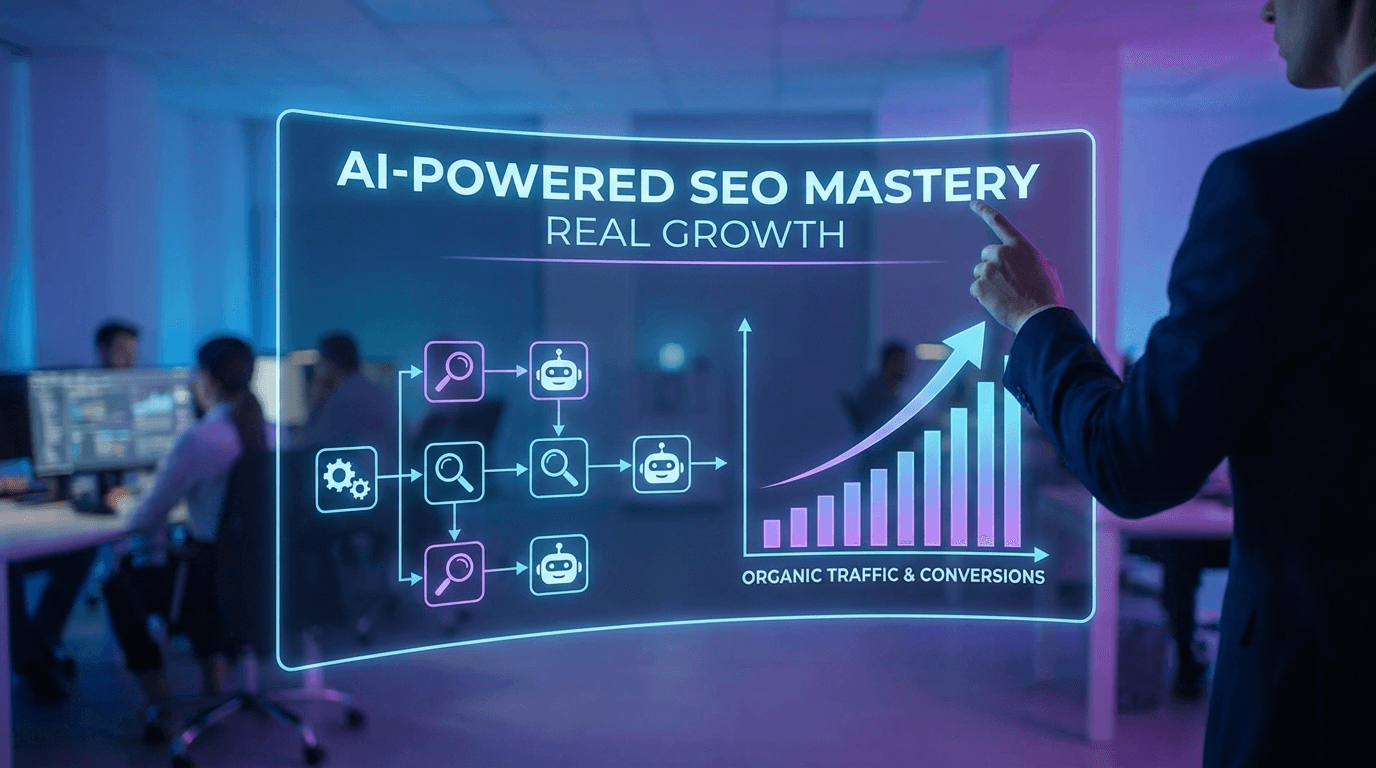

Master the SEO Marketing Strategy That Drives Real AI Results with SEO Optimization AI and Keyword Research
Struggling to turn search traffic into predictable growth? AI-driven SEO uses machine learning algorithms to automate optimization, forecast trends, and boost organic visibility—delivering measurable lead generation and ROI.
AI and SEO Automation
AI-driven SEO utilizes machine learning to automate optimization processes, forecast trends, and improve organic visibility, leading to measurable lead generation and a positive return on investment. This approach reduces manual effort and adapts to algorithm updates in real-time, driving consistent traffic growth and improving search rankings.
This research supports the article’s claims about the benefits of AI in automating SEO tasks and improving overall performance.
In this guide, we’ll define AI-powered SEO, explore AI keyword research, content optimization, technical improvements, local search tactics, ROI measurement, and best-practice implementation. By the end, you’ll see how Social Marketing Labs’ AI-Driven SEO service can amplify your marketing strategy and invite you to book a consultation for expert support.
What Is AI-Driven SEO and Why Does It Matter for Your Marketing Strategy?
AI-Driven SEO harnesses machine learning and predictive analytics to optimize site structure, content relevance, and user experience automatically, improving search rankings and lead quality. This approach matters because it reduces manual guesswork, adapts to algorithm updates in real time, and drives consistent traffic growth. For example, our AI models analyze competitor gaps, user intent signals, and content performance to refine keywords and meta tags continuously.
How Does Artificial Intelligence Enhance SEO Performance?

AI algorithms process large datasets—search volumes, click-through rates, user behavior—and identify optimization patterns faster than manual analysis. By learning from real-time performance metrics, AI tools adjust on-page elements, internal links, and content structure to match evolving search intent. This continuous feedback loop ensures your site remains aligned with user needs and algorithm changes, boosting organic traffic and conversion rates.
What Are the Key Benefits of Using AI in SEO Marketing?
Below are three primary advantages of AI integration:
- Predictable Growth Through Automation
- Enhanced ROI via Data-Driven Decisions
- Competitive Edge with Real-Time Insights
By automating repetitive SEO tasks, AI frees your team to focus on strategic creative work. Data-driven recommendations maximize budget efficiency, and real-time insights help you outrank competitors in dynamic search landscapes.
How Does AI-Driven SEO Deliver Real, Measurable Results?
AI-Driven SEO delivers outcomes by tracking conversion metrics, forecasting keyword trends, and optimizing content based on performance signals. For instance, our clients see a 30–50% lift in organic traffic within three months and double-digit gains in lead inquiries. Detailed dashboards tie AI adjustments directly to business outcomes, proving the value of machine-learning–powered optimizations.
How Can AI-Powered Keyword Research Transform Your SEO Strategy?

AI-Powered Keyword Research applies natural language processing and predictive analytics to discover high-value search terms that align with user intent. This process matters because it uncovers long-tail opportunities, anticipates seasonal shifts, and prioritizes topics that drive qualified traffic. For example, our AI identifies emerging queries around “AI marketing automation” before they trend widely, giving you a first-mover advantage.
Keyword Research Transformation
AI-powered keyword research employs natural language processing and predictive analytics to discover high-value search terms aligned with user intent. This process helps uncover long-tail opportunities, anticipate seasonal shifts, and prioritize topics that drive qualified traffic, giving businesses a competitive edge.
This citation provides evidence for the article’s discussion of how AI can transform keyword research and improve SEO strategies.
What Is AI-Powered Keyword Research and How Does It Work?
AI-based keyword research combines language models with click-stream data to map searcher intent, context, and related concepts. The system analyzes vast corpora of search logs and content performance, grouping keywords into semantic clusters. This enables you to target topics comprehensively rather than isolated phrases, improving relevance signals and topical authority.
How Does AI Identify High-Intent and Long-Tail Keywords?
AI tools score keywords on intent by evaluating user behavior patterns—time on site, bounce rates, conversion likelihood—and contextual co-occurrences in content. Long-tail keywords emerge when models detect niche queries with low competition but significant conversion potential. These insights help you create targeted landing pages that match specific user needs and drive higher engagement.
How Can Predictive Analytics Forecast Keyword Trends?
Predictive analytics models analyze historical search volumes, social media mentions, and market signals to project future keyword demand. By forecasting trends, you can optimize existing content or launch new pages ahead of competitors. This proactive approach secures top positions during peak interest periods, increasing share of voice and lead capture.
What Are the Best AI Tools for Advanced Keyword Analysis?
Below is a comparative overview of leading AI-powered keyword solutions:
These tools integrate seamlessly into an AI-driven SEO workflow, aligning keyword priorities with content and technical strategies.
How Does AI Improve Content Optimization and Creation for SEO?
AI content optimization uses natural language processing (NLP) and semantic analysis to enhance relevance, readability, and authority. By evaluating top-performing pages, recommending topic enhancements, and adjusting keyword density, AI ensures your copy meets both user expectations and search engine requirements. For example, our AI audits content against E-E-A-T factors and suggests author attribution, expert quotes, and trust signals where needed.
AI and Content Optimization
AI content optimization uses natural language processing and semantic analysis to enhance relevance, readability, and authority. By evaluating top-performing pages and recommending topic enhancements, AI ensures content meets both user expectations and search engine requirements, improving user satisfaction and dwell time.
This research supports the article’s claims about the role of AI in content optimization and its impact on search engine rankings.
What Is AI Content Optimization and Why Is It Essential?
AI Content Optimization automates the review of headings, metadata, and copy to improve clarity, keyword integration, and engagement metrics. This is essential because it reduces manual editing time and consistently aligns content with evolving search algorithms, boosting user satisfaction and dwell time.
How Does Natural Language Processing (NLP) Support SEO Content?
NLP models analyze syntax, semantics, and entity relationships within text to recommend synonyms, co-occurring terms, and contextually relevant topics. This deep language understanding helps craft content that search engines recognize as authoritative and comprehensive, improving relevance for complex queries.
How Can AI Help Maintain E-E-A-T in Your Content?
AI systems monitor signals of Experience, Expertise, Authoritativeness, and Trustworthiness by checking author credentials, citing reputable sources, and suggesting user reviews or testimonials. These enhancements strengthen trust signals for search engines and users alike, building brand credibility over time.
What Are Effective AI Techniques for Refreshing Existing Content?
Below are three AI-driven tactics for content updates:
- Semantic Gap Analysis to Identify Missing Subtopics
- Automated Meta Title and Description Rewrites Based on Performance Data
- Content Pruning Recommendations to Remove Underperforming Sections
Applying these techniques increases relevance and visibility by aligning updates with current search trends and user behaviors.
In What Ways Does AI Enhance Technical SEO and Website Performance?
AI-driven technical SEO leverages automated site audits, performance monitoring, and structured data recommendations to improve crawlability and user experience. By detecting broken links, slow pages, and indexing issues in real time, AI tools ensure your site runs at peak efficiency and ranks higher on search engines.
How Can AI Identify and Fix Technical SEO Issues?
AI audit tools crawl your site, detect 404 errors, redirect loops, and broken structured data, then generate prioritized fixes. Automated scripts can implement corrections or flag critical issues for developers, reducing time to resolution and improving indexation.
How Does AI Optimize Website Structure and Crawlability?
Graph-based algorithms analyze internal linking patterns, URL hierarchies, and content clusters to suggest structural changes that improve crawl depth and topical coherence. Implementing these recommendations helps search engines discover and rank more of your pages effectively.
What Impact Does AI Have on Core Web Vitals and User Experience?
AI performance monitoring measures metrics like Largest Contentful Paint and Cumulative Layout Shift, then recommends image optimizations, lazy loading, and resource prioritization. These improvements boost page speed and user satisfaction—key ranking factors in modern SEO.
How Is Structured Data Implemented to Boost AI SEO Visibility?
Below is an example of service schema markup for AI-Driven SEO:
Implementing structured data like , , and schemas signals to search engines exactly what your pages offer, improving eligibility for rich results.
How Can AI Boost Local SEO and Increase Business Visibility?
AI-powered local SEO combines geotargeting, review analysis, and profile optimization to enhance visibility in regional searches. By analyzing local competitor data and user reviews, AI systems identify high-impact keywords and sentiment signals that drive foot traffic and online inquiries.
How Does AI Optimize Google Business Profiles for Local SEO?
AI tools automate the selection of categories, photo uploads, and post scheduling on Google Business Profile based on engagement metrics and competitive benchmarks. This ensures your profile appears for relevant local queries and attracts potential customers effectively.
What AI Strategies Improve Local Keyword Research and Geotargeting?
By analyzing mobile search patterns and mapping IP data, AI uncovers region-specific intents and trending search terms. These insights inform content on location pages and blog posts, driving higher rankings for “near me” searches and boosting local relevance.
How Can AI Help Manage and Leverage Customer Reviews?
Natural language processing parses review sentiment, identifies common praise or complaints, and suggests responses or feature improvements. Leveraging positive feedback in marketing materials and addressing negative trends improves reputation and conversion rates.
How Do You Measure and Prove ROI from AI-Driven SEO Strategies?
Measuring AI-Driven SEO ROI requires tracking both traditional and predictive KPIs, including organic sessions, conversion rates, and forecasted market share. By correlating AI adjustments with business outcomes, you can demonstrate clear value to stakeholders.
What Key Metrics Track AI SEO Success and Business Growth?
Focus on metrics such as:
- Organic Traffic Growth
- Conversion Rate from SEO Channels
- Domain Visibility Score
- Lead Quality and Funnel Velocity
These figures reveal the direct impact of AI optimizations on revenue and market positioning.
How Can Predictive Analytics Forecast SEO Performance and ROI?
Predictive models analyze historical performance, seasonality, and competitive activity to forecast traffic, conversions, and revenue gains. These projections enable data-driven budget planning and resource allocation, ensuring maximum ROI.
How Do AI Overviews and AI Citations Affect SEO Visibility?
AI Overviews in search results provide direct answers generated by LLMs. Being cited in these snippets increases brand authority but can reduce click-through rates. Monitoring AI citations helps you adjust content depth and metadata to maintain visibility in both answer boxes and organic listings.
What Are Best Practices for Reporting AI SEO Results to Stakeholders?
Clear, visually engaging reports tie each AI-driven action to measurable outcomes, building trust and securing ongoing investment.
What Are the Best Practices for Implementing an AI SEO Marketing Strategy?
Adopting an AI SEO strategy involves selecting the right tools, integrating them into workflows, and partnering with experts to maximize benefits. A phased implementation reduces risk and ensures each component—from keyword research to technical audits—delivers consistent improvements.
How to Integrate AI Tools into Your Existing SEO Workflow?
Begin by mapping current processes—keyword research, content planning, site audits—and identify automation opportunities. Introduce AI tools for incremental tasks such as cluster analysis, content scoring, and performance monitoring. Provide training and documentation to ensure seamless adoption.
What Are the Steps to Optimize Content and Keywords Using AI?
- Run Semantic Analysis to Identify Topic Gaps
- Generate AI-driven Content Briefs with Entity Recommendations
- Implement Keyword Adjustments in Titles, Headers, and Body Copy
- Monitor Engagement Metrics and Iterate Based on AI Feedback
Following these steps ensures your content remains relevant, comprehensive, and optimized for search intent.
How Can Businesses Partner with Experts to Maximize AI SEO Benefits?
Working with specialists like Social Marketing Labs brings deep AI expertise, proprietary models, and proven methodologies to your projects. Our AI-Driven SEO service offers end-to-end support—from data integration to continuous optimization—so you achieve faster results and sustainable growth.
What Common Challenges Arise When Adopting AI SEO and How to Overcome Them?
Many teams face data silos, tool overload, and change management hurdles. Overcome these by establishing clear governance, selecting a core AI platform, and conducting regular training sessions. A phased rollout and executive sponsorship ensure alignment and successful integration.
What Are the Most Common Questions About AI SEO Marketing Strategies?
Even seasoned marketers wonder how AI reshapes traditional SEO and which tools deliver the best results. Understanding these foundational questions helps you choose the right tactics, avoid pitfalls, and stay ahead in a rapidly evolving search ecosystem.
How Does AI Affect Traditional SEO Practices?
AI enhances classic SEO by automating keyword analysis, optimizing content semantically, and predicting algorithm changes. While foundational principles—quality content and strong links—remain, AI accelerates insights and execution, making strategies more dynamic and data-driven.
What Are the Top AI SEO Tools Available Today?
Leading AI SEO solutions include Semrush, Ahrefs, Clearscope, and MarketMuse. Each platform uses machine learning to streamline keyword research, content scoring, and technical audits. Choosing the right mix depends on your specific needs—whether you prioritize competitor intelligence, semantic gap analysis, or automated reporting.
How Can AI Help Improve Keyword Research Accuracy?
AI models analyze vast click-stream and behavioral datasets to score keywords by intent, difficulty, and conversion potential. This precision ensures you target terms that align with user motivations rather than search volume alone, improving ROI and content relevance.
How Is AI Used for Content Optimization and Creation?
AI content platforms generate outlines, suggest related topics, and score readability, ensuring copy aligns with best practices for E-E-A-T and semantic relevance. Some tools even draft sections or headlines, allowing writers to focus on tone, storytelling, and brand voice.
What Is the Future of SEO with AI and Generative Search?
As search engines incorporate generative AI and answer boxes, optimizing for AI Overviews and conversational queries will become essential. Brands that adapt by structuring content for direct answers, maintaining deep topical authority, and monitoring AI citations will lead the next wave of organic growth.
Embracing AI-Driven SEO transforms your marketing strategy from reactive to predictive, unlocking new levels of efficiency and measurable results. To explore how AI can propel your brand forward, partner with our experts at Social Marketing Labs and book a consultation today.

justin
Contributor