
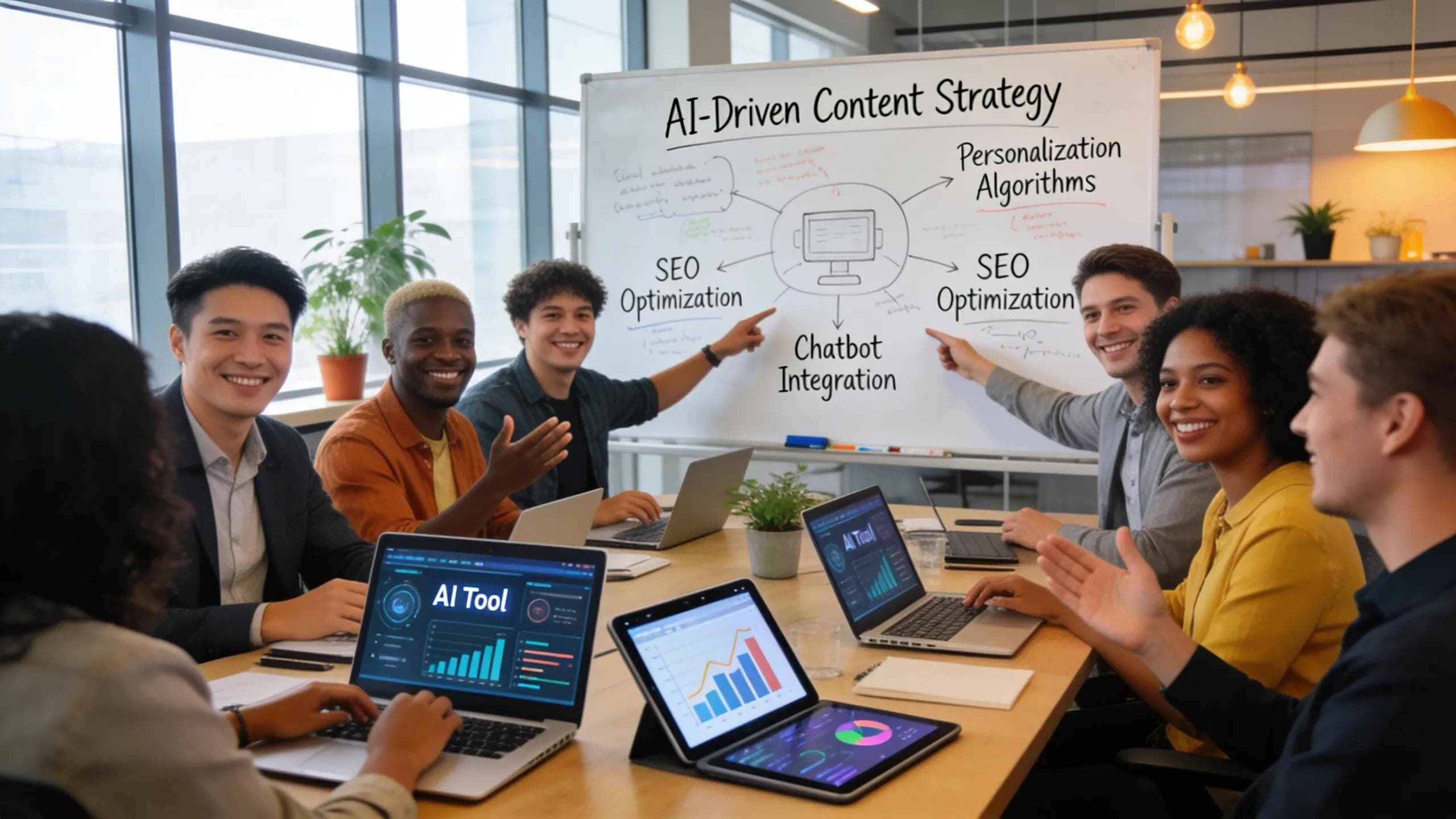

Building Industry Thought Leadership with AI-Assisted Content Strategy for Small Businesses
By Justin Gray, Social Marketing Labs LLC
In the rapidly evolving business landscape, thought leadership has emerged as a strategic necessity for small businesses. This article delves into how artificial intelligence (AI) can assist in developing robust content strategies that enhance brand authority, facilitate effective audience engagement, and highlight industry expertise. By leveraging AI-driven insights, businesses can create content that resonates deeply with their target audience, establishing their reputation as thought leaders. Many businesses struggle with defining their niche and gaining a prominent voice in their industry, leading to lost opportunities. A well-implemented AI content strategy can bridge this gap, allowing businesses to scale their messaging, optimize outreach, and foster sustainable revenue systems. Throughout this article, we will explore AI’s role in enhancing thought leadership, the benefits it brings for small business owners, and effective strategies for implementation.
Indeed, global business leaders view thought leadership as a strategic tool to differentiate their organizations and contribute significantly to their bottom line.
Thought Leadership as a Strategic Lever for Business Growth
This study is particularly important given that the majority (92%) of the global business leaders we surveyed see thought leadership as a strategic lever they can pull to distinguish their organization in the marketplace. Additionally, a significant percentage (57%) say the application of thought leadership insights significantly contributed to their organization’s bottom line, and nearly half (49%) indicated it improved their organization’s ability to attract and retain top talent. The ROI of Thought Leadership: Calculating the Value that Sets Organizations Apart, 2025
Thought Leadership as a Strategic Lever for Business Growth
This study is particularly important given that the majority (92%) of the global business leaders we surveyed see thought leadership as a strategic lever they can pull to distinguish their organization in the marketplace. Additionally, a significant percentage (57%) say the application of thought leadership insights significantly contributed to their organization’s bottom line, and nearly half (49%) indicated it improved their organization’s ability to attract and retain top talent. The ROI of Thought Leadership: Calculating the Value that Sets Organizations Apart, 2025
How Does AI Enhance Thought Leadership Strategies for Small Businesses?
AI enhances thought leadership strategies by streamlining content creation, optimizing audience targeting, and improving overall marketing efficiency. One critical advantage is the ability of AI tools to analyze vast amounts of data quickly, identifying trends and topics that resonate with specific audiences. This analytical power not only saves time but also ensures that the content produced aligns closely with market demands, ultimately supporting the authority of the brand in its field. Furthermore, as companies invest in AI for content strategy, they witness significant efficiency gains, cost savings, and enhanced engagement with their audience.
Integrating AI-driven marketing solutions enables businesses to craft a powerful narrative around their expertise, thus reinforcing their position as industry leaders. For small businesses, this approach fosters sustainable brand growth, paving the way for ongoing success and greater market presence.
Generative AI, in particular, empowers small and medium-sized enterprises by enhancing their market adaptability and productivity through innovations in content creation, customer engagement, and decision-making.
Generative AI for SME Content Creation & Market Adaptability
Generative Artificial Intelligence (AI) is revolutionizing the competitive environment for small and medium-sized enterprises (SMEs) by improving market adaptability, innovation, and productivity. The transformative impact of generative AI on SMEs is the primary focus of this paper, with a particular emphasis on its function in content creation, customer engagement, automation, and decision-making. Empowering SMEs through generative AI: Opportunities, challenges, and strategic implications for sustainable innovation, 2025
Generative AI for SME Content Creation & Market Adaptability
Generative Artificial Intelligence (AI) is revolutionizing the competitive environment for small and medium-sized enterprises (SMEs) by improving market adaptability, innovation, and productivity. The transformative impact of generative AI on SMEs is the primary focus of this paper, with a particular emphasis on its function in content creation, customer engagement, automation, and decision-making. Empowering SMEs through generative AI: Opportunities, challenges, and strategic implications for sustainable innovation, 2025
What Are the Benefits of AI-Powered Content Marketing for SMBs?
AI-powered content marketing offers several significant benefits for small and medium-sized businesses (SMBs):
Improved Targeting and Personalization: AI tools enable SMBs to analyze customer behavior and preferences, allowing for tailored messaging and content delivery.
Faster Content Production: Automation of content creation processes, such as blog writing and social media posts, allows businesses to maintain constant engagement without overwhelming resources.
In-Depth Analytics: AI provides actionable insights and detailed analytics, helping SMBs track the performance of their content and adjust strategies accordingly.
Improved Targeting and Personalization: AI tools enable SMBs to analyze customer behavior and preferences, allowing for tailored messaging and content delivery.
Faster Content Production: Automation of content creation processes, such as blog writing and social media posts, allows businesses to maintain constant engagement without overwhelming resources.
In-Depth Analytics: AI provides actionable insights and detailed analytics, helping SMBs track the performance of their content and adjust strategies accordingly.
By leveraging these advantages, SMBs can position themselves competitively within their industries, creating content that not only informs but also engages and converts audiences.
How AI Improves Brand Authority and Social Media Presence
AI plays a crucial role in enhancing brand authority and social media presence through smart automation and analytics. The use of AI algorithms allows businesses to determine optimal posting times, resulting in higher engagement rates and visibility across various platforms. Moreover, through data-driven content curation, companies can share valuable insights that reflect their expertise, thus significantly elevating their brand perception.
The personalization capabilities of AI also foster greater connections with customers, allowing businesses to engage in meaningful conversations that resonate with their audience’s interests and values. This engagement is vital for establishing a loyal customer base and reinforcing a brand’s authority.
Which AI Marketing Tools Best Support Content Automation and Brand Building?

Numerous AI marketing tools can significantly aid small businesses in automating content and enhancing brand building. Some of these include:
Hootsuite: A social media management tool that utilizes AI to optimize posting schedules and analyze engagement metrics.
Canva: An AI-powered design tool that helps create engaging visual content with ease, promoting brand aesthetics.
BuzzSumo: A content research tool that identifies high-performing topics and trends within specific industries, guiding content strategy.
Hootsuite: A social media management tool that utilizes AI to optimize posting schedules and analyze engagement metrics.
Canva: An AI-powered design tool that helps create engaging visual content with ease, promoting brand aesthetics.
BuzzSumo: A content research tool that identifies high-performing topics and trends within specific industries, guiding content strategy.
By integrating these tools, businesses can streamline their marketing efforts while reinforcing their brand identity, thus effectively enhancing their market presence.
What Features Should SMBs Look for in AI Marketing Platforms?
When selecting AI marketing platforms, small businesses should consider several critical features:
User-Friendly Interface: The platform should be easy to navigate, enabling team members to utilize its features without extensive training.
Scalability: As businesses grow, their marketing needs will evolve. Choosing a platform that can scale with business growth is essential.
Integration Capabilities: An effective AI tool should easily integrate with existing systems and tools to enhance workflow without disruption.
User-Friendly Interface: The platform should be easy to navigate, enabling team members to utilize its features without extensive training.
Scalability: As businesses grow, their marketing needs will evolve. Choosing a platform that can scale with business growth is essential.
Integration Capabilities: An effective AI tool should easily integrate with existing systems and tools to enhance workflow without disruption.
These features are pivotal for ensuring that AI marketing platforms deliver maximum return on investment and support long-term business growth.
How Does Marketing Automation Drive Sustainable Digital Growth Systems?

Marketing automation drives sustainable digital growth by increasing efficiency and reducing operational costs. By automating repetitive tasks such as email marketing and social media management, companies can focus their resources on strategic initiatives. This not only streamlines operations but also contributes to improved marketing return on investment (ROI).
Automation allows small businesses to maintain consistent customer engagement through targeted campaigns without the need for extensive human resources. As a result, they can effectively nurture leads and convert them into loyal customers over time. Understanding the impact of automation can equip businesses with the tools needed to adapt to changing market dynamics and customer preferences.
Research confirms that AI-driven dynamic content creation significantly influences customer engagement and lead-to-sales conversion rates for micro, small, and medium enterprises.
AI-Driven Content Boosts MSME Market Conversion Rates
This study investigated the effect of AI-driven dynamic content creation on market conversion rate of Micro, Small, and Medium Enterprises (MSMEs) in Nigeria’s Federal Capital Territory (FCT). The primary objectives are to investigate how content diversity, update frequency, and personalization influence customer engagement and lead-to-sales conversion. Ai-Driven Dynamic Content Creation and Micro-Small and Medium Enterprises Market Performance in The Federal Capital Territory,
Abuja, B Nana, 2025
AI-Driven Content Boosts MSME Market Conversion Rates
This study investigated the effect of AI-driven dynamic content creation on market conversion rate of Micro, Small, and Medium Enterprises (MSMEs) in Nigeria’s Federal Capital Territory (FCT). The primary objectives are to investigate how content diversity, update frequency, and personalization influence customer engagement and lead-to-sales conversion. Ai-Driven Dynamic Content Creation and Micro-Small and Medium Enterprises Market Performance in The Federal Capital Territory,
Abuja, B Nana, 2025
What Are Effective Small Business Thought Leadership Strategies Using AI?
Establishing thought leadership using AI requires a structured approach. Here are some effective strategies small businesses can implement:
Content Creation: Regularly produce high-quality content that showcases expertise and addresses pain points within the industry.
Engagement through Social Media: Utilize AI tools to analyze social media trends, allowing businesses to participate in conversations and engage with their audience effectively.
Data-Driven Insights: Implement AI analytics to gain insights into audience behavior and preferences, ensuring content remains relevant and impactful.
Content Creation: Regularly produce high-quality content that showcases expertise and addresses pain points within the industry.
Engagement through Social Media: Utilize AI tools to analyze social media trends, allowing businesses to participate in conversations and engage with their audience effectively.
Data-Driven Insights: Implement AI analytics to gain insights into audience behavior and preferences, ensuring content remains relevant and impactful.
By employing these strategies, small businesses can effectively build authority and establish themselves as leaders in their respective fields.
How to Build a Scalable AI-Driven Content System Step-by-Step
To build a scalable AI-driven content system, follow these steps:
Identify Goals: Define clear marketing and content goals that align with overall business objectives.
Choose the Right Tools: Research and select AI tools that fit the specific needs of your business, such as content automation or analytics platforms.
Develop a Content Calendar: Plan content production and distribution to maintain consistency and strategize around key topics that resonate with your audience.
Monitor and Adjust: Utilize analytics from AI tools to measure success and adjust strategies as needed based on performance data.
Identify Goals: Define clear marketing and content goals that align with overall business objectives.
Choose the Right Tools: Research and select AI tools that fit the specific needs of your business, such as content automation or analytics platforms.
Develop a Content Calendar: Plan content production and distribution to maintain consistency and strategize around key topics that resonate with your audience.
Monitor and Adjust: Utilize analytics from AI tools to measure success and adjust strategies as needed based on performance data.
This structured approach will not only enhance content productivity but also ensure a coherent brand message across various platforms.
Which Social Media Brand Building Tactics Leverage AI Insights?
Several social media brand-building tactics can greatly benefit from AI insights:
Custom Targeting: Use AI to analyze follower demographics and behaviors, ensuring that content directly appeals to the target audience.
Content Optimization: Implement AI-driven analyzes to refine messaging and visual elements based on engagement metrics.
Trend Analysis: Leverage AI to track emerging trends and conversations, allowing businesses to stay ahead in their respective industries.
Custom Targeting: Use AI to analyze follower demographics and behaviors, ensuring that content directly appeals to the target audience.
Content Optimization: Implement AI-driven analyzes to refine messaging and visual elements based on engagement metrics.
Trend Analysis: Leverage AI to track emerging trends and conversations, allowing businesses to stay ahead in their respective industries.
These tactics contribute to a cohesive brand strategy that resonates with audiences while fostering community engagement and loyalty.
How Can SMBs Measure and Optimize AI-Assisted Content Marketing Success?
To measure and optimize the success of AI-assisted content marketing, small businesses should focus on several key performance indicators (KPIs):
Engagement Rates: Track interactions such as shares, comments, and likes to gauge content effectiveness.
Conversion Rates: Monitor how well content converts viewers into leads or customers, providing insight into messaging success.
Traffic Analytics: Evaluate website and social media traffic driven by content to understand audience reach and behavior.
Engagement Rates: Track interactions such as shares, comments, and likes to gauge content effectiveness.
Conversion Rates: Monitor how well content converts viewers into leads or customers, providing insight into messaging success.
Traffic Analytics: Evaluate website and social media traffic driven by content to understand audience reach and behavior.
By analyzing these KPIs, businesses can make informed adjustments to their content strategies, ensuring ongoing improvement in audience engagement and marketing effectiveness.
What Case Studies Illustrate Successful AI-Driven Thought Leadership for SMBs?
Several case studies exemplify successful AI-driven thought leadership:
Company A utilized AI analytics to refine their content approach, resulting in increased audience engagement within six months.
Company B implemented an AI-powered social media strategy, significantly improving their brand perception and leading to a boost in sales.
Company C adopted AI-driven content marketing tools that streamlined their processes, helping them to establish themselves as industry experts through superior content quality.
Company A utilized AI analytics to refine their content approach, resulting in increased audience engagement within six months.
Company B implemented an AI-powered social media strategy, significantly improving their brand perception and leading to a boost in sales.
Company C adopted AI-driven content marketing tools that streamlined their processes, helping them to establish themselves as industry experts through superior content quality.
These examples illustrate the potential of AI-assisted content strategies in achieving thought leadership and business growth.
How Do SMBs Leverage Integrated AI Marketing Systems for Competitive Advantage?
Integrated AI marketing systems provide small businesses with a competitive edge by enabling seamless data sharing and collaboration across different marketing channels. This integration streamlines workflows, improves transparency, and facilitates better decision-making based on consistent data.
Using AI systems allows SMBs to react swiftly to market changes and customer feedback, enhancing their ability to innovate and cater to evolving consumer needs. The cumulative effect of these advantages positions small businesses favorably against larger competitors, allowing them to thrive in a crowded marketplace.
Different AI tools offer various advantages, which can be summarized in the following table:
AI Tool
Benefit
Best Use Case
Hootsuite
Social media scheduling
Managing multiple platforms
BuzzSumo
Content research
Identifying trending topics
Grammarly
Content quality improvement
Ensuring error-free writing
HubSpot
Inbound marketing automation
Lead generation and management
This comparison showcases how leveraging specialized AI tools can enhance various facets of a small business’s marketing strategy.

justin
Contributor