
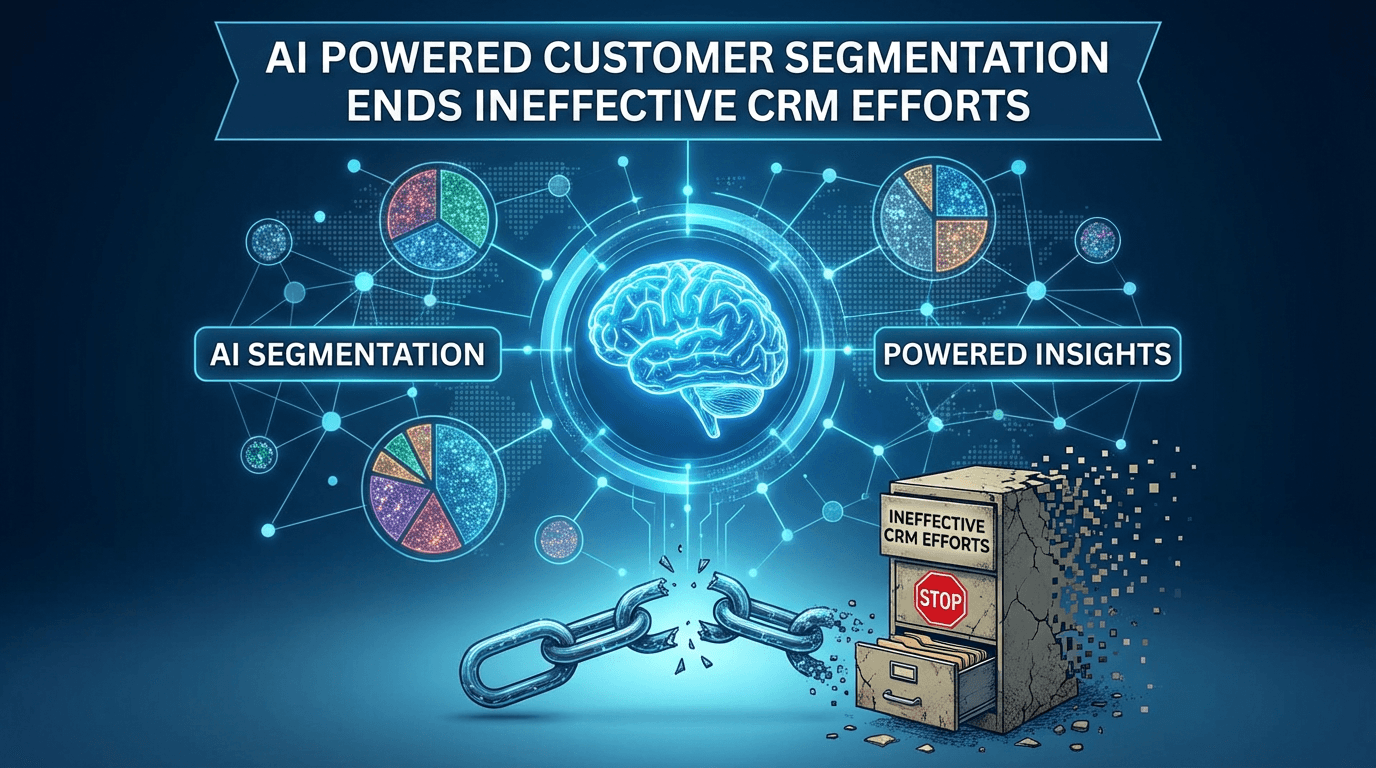
AI Powered Customer Segmentation: How It Ends Ineffective CRM Efforts and Boosts Marketing Automation
Customer data silos and static lists waste marketing budgets and undermine customer experience. AI powered customer segmentation leverages machine learning to analyze demographic, behavioral, and transactional data in real time, transforming generic outreach into precision engagement. In this guide, you’ll discover how an AI powered CRM platform automates dynamic customer grouping, drives personalized campaigns with crm marketing automation software, and prepares your organization for hyper-personalization trends. We’ll define core concepts, explore key benefits and implementation steps, examine real-world success stories, outline future innovations, address privacy concerns, and explain how segmentation fuels smarter marketing automation.
What Is AI Powered Customer Segmentation and How Does It Improve CRM?
AI powered customer segmentation uses advanced algorithms to identify patterns in customer data, enabling dynamic grouping based on shared attributes and predicted behaviors. This approach overcomes the limitations of manual list builds by continuously adapting segments as customers interact across channels.
Before reviewing the mechanics, consider how ineffective CRM efforts stagnate: static segments miss emerging trends, broad targeting wastes ad spend, and one-size-fits-all campaigns erode engagement. AI segmentation closes these gaps by automating analysis, forecasting intent, and delivering personalized experiences at scale.
What Is AI Customer Segmentation?
AI customer segmentation is the use of machine learning to categorize customers into micro-segments based on multi-dimensional data, from purchase history to click paths. By applying clustering algorithms, this method uncovers hidden affinities that inform targeted messaging and product recommendations.
How Does Machine Learning Enable Dynamic Customer Segmentation?
Machine learning enables dynamic customer segmentation by continuously ingesting new data and adjusting clusters in real time. Algorithms such as K-means clustering and hierarchical clustering process streaming behavior, creating context-aware segments that reflect evolving preferences and lifecycle stages.
How Does AI Segmentation Differ from Traditional CRM Methods?
Unlike rule-based segmentation that relies on fixed criteria, AI segmentation learns from patterns and adapts without manual intervention. Traditional CRM methods produce static lists that grow outdated, whereas AI driven customer profiling updates segment definitions automatically, improving relevance and reducing operational overhead.
What Are the Key Benefits of AI Powered Customer Segmentation for Businesses?
AI powered customer segmentation delivers measurable value across targeting, personalization, and efficiency. Below is an overview of principal advantages.
This table shows how AI segmentation attributes directly drive business outcomes through targeted and proactive marketing automation.
AI and Customer Segmentation Benefits
AI-powered customer segmentation offers significant advantages, including enhanced precision in targeting, improved personalization, predictive analytics capabilities, and increased marketing efficiency, leading to a higher return on investment.
This research supports the article’s claims about the benefits of AI segmentation by providing evidence of its positive impact on marketing outcomes.
How Does AI Improve Precision Targeting and Micro-Segmentation?
AI improves precision targeting by identifying micro-segments—small groups with highly specific traits—and assigning tailored messages. This approach increases relevance and reduces wasted impressions, ensuring marketing budgets are allocated to audiences most likely to convert.
How Does AI Enhance Personalization and Customer Experience?
By scoring each customer’s preferences and intent, AI powered customer segmentation enables personalized product recommendations, email content, and promotional offers. The result is a segment-of-one experience that fosters loyalty and long-term engagement.
Personalization and Customer Experience
By analyzing customer preferences and behaviors, AI enables personalized product recommendations, email content, and promotional offers, fostering customer loyalty and engagement. This approach creates a segment-of-one experience.
This citation reinforces the article’s discussion on how AI enhances personalization and improves the overall customer experience.
How Does Predictive Analytics Drive Proactive Customer Engagement?
Predictive analytics forecasts future behaviors—such as churn risk or upsell opportunities—by analyzing historical patterns and real-time signals. Brands can then trigger automated retention campaigns or cross-sell messages before issues arise, strengthening customer relationships.
How Does AI Segmentation Increase Marketing Efficiency and ROI?
AI segmentation automates the labor-intensive tasks of data analysis and segment maintenance, freeing teams to focus on creative strategy. Automated workflows in crm marketing automation software eliminate manual audience updates and optimize resource allocation for maximum ROI.
How Can Businesses Implement AI Powered Customer Segmentation Effectively?
Implementing AI segmentation requires a strategic blend of data readiness, platform selection, and continuous optimization.
What Data Types Are Essential for AI Segmentation?
Effective AI segmentation relies on diverse data sources:
How to Choose the Right AI Powered CRM Platform for Segmentation?
- Data Integration – Ensure seamless API connections to all customer touchpoints.
- Algorithm Transparency – Prefer systems offering explainable AI to trust segment logic.
- Scalability – Verify the platform handles increasing data volumes and real-time processing.
- Automation Capabilities – Confirm built-in crm marketing automation software features for workflow creation and campaign orchestration.
What Are the Steps for Integrating AI Segmentation into Existing CRM Systems?
- Audit Data Quality – Cleanse and unify customer records across channels.
- Configure Data Streams – Map inbound and outbound data flows into the AI engine.
- Define Initial Segment Goals – Establish KPIs like open rate uplift or churn reduction.
- Activate Automated Workflows – Link segments to email journeys, ads, and SMS triggers.
- Monitor and Adjust – Use dashboards to track segment performance and refine rules.
How to Continuously Optimize AI Segmentation for Better Results?
Continuous optimization combines A/B testing with model retraining and feedback loops. Regularly evaluate segment performance, refine data inputs, and retrain clustering algorithms to account for shifting behaviors and market conditions. This iterative process sustains segmentation relevance and campaign effectiveness.
What Are Real-World Success Stories of AI Powered Customer Segmentation?
AI segmentation’s impact is best illustrated by leading digital innovators.
How Has Amazon Reduced Customer Churn Using AI Segmentation?
Amazon reduced churn by 30% through predictive segmentation that identifies at-risk customers based on browsing and purchase patterns. Automated retention campaigns triggered timely offers, reinforcing loyalty and increasing lifetime value.
How Does Netflix Use AI for Personalized Recommendations?
Netflix’s recommendation engine segments viewers by genre affinity, watch time, and engagement metrics. This hyper-personalization drives a 75% increase in content consumption by surfacing relevant titles tailored to individual preferences.
What Results Have Starbucks Achieved with AI Driven Customer Targeting?
Starbucks leverages AI segmentation in its loyalty program to send location-based promotions and customized beverage offers. This targeted approach boosted reward redemptions by 20% and increased visit frequency among high-value members.
What Are the Future Trends in AI Powered CRM and Customer Segmentation?
Emerging innovations will deepen personalization and transparency in AI CRM.
How Will Hyper-Personalization Transform CRM Efforts?
Hyper-personalization will combine real-time context with long-term profiles, creating dynamic customer journeys that adapt at the individual level. AI overviews will anticipate needs before customers express them, driving unmatched relevance in messaging.
What Role Will Semantic Search and Explainable AI Play in Segmentation?
Semantic search will enable AI CRM systems to interpret intent beyond keywords, enriching segmentation with concept-level understanding. Explainable AI will demystify model decisions, fostering trust and enabling compliance with emerging transparency standards.
How Will Integration with Marketing Automation and BI Tools Evolve?
Future platforms will unify AI segmentation with business intelligence dashboards and marketing automation, delivering end-to-end analytics in a single interface. This convergence will streamline decision-making and accelerate action across sales, service, and marketing teams.
What Ethical and Privacy Considerations Should Be Addressed in AI Customer Segmentation?
Responsible AI adoption requires rigorous attention to regulations and ethical guidelines.
How Does GDPR and CCPA Impact AI Segmentation Practices?
GDPR and CCPA mandate explicit consent for data collection and the right to access or erase personal profiles. AI systems must incorporate compliance checks, anonymize data where required, and provide transparent opt-out options to safeguard consumer rights.
What Are Best Practices for Ethical AI Use in CRM?
Ethical AI in CRM demands:
- Transparency in how segments are generated
- Bias Mitigation through balanced training data
- Consent Management for all data sources
- Regular Audits to detect unintended discrimination
Adhering to these practices builds customer trust and ensures long-term viability.
How Does AI Powered Customer Segmentation Enhance CRM Marketing Automation Software?
AI powered customer segmentation elevates crm marketing automation software by feeding it actionable audiences and predictive insights.
How Does AI Enable Smarter Marketing Campaigns?
AI segmentation supplies marketing automation engines with context-rich segments, enabling rule-based triggers that launch personalized emails, ads, and SMS at optimal times. This precision reduces wasted spend and maximizes engagement.
What Are the Benefits of Combining AI Segmentation with Marketing Automation?
By merging AI segmentation and marketing automation:
- Campaign Agility accelerates launch cycles
- Resource Optimization allocates budget to high-value segments
- Consistent Experience unifies messaging across channels
Together, these capabilities drive stronger ROI and sustained customer loyalty.
How Does AI Improve Customer Journey Optimization in CRM Platforms?
AI-driven segments inform journey mapping by highlighting likely next actions for each group. Automation workflows then adjust touchpoints—such as email cadence or offer types—to guide customers through a fluid, personalized path toward conversion.
AI powered customer segmentation elevates CRM systems and crm marketing automation software into intelligent, self-optimizing platforms. By anchoring segmentation in machine learning, organizations can unify data, predict behaviors, and deliver the right message at the right moment. For an in-depth overview of the fundamentals, explore our guide to AI customer segmentation basics or learn about benefits of AI segmentation for businesses to see how your marketing ROI can improve.

justin
Contributor