
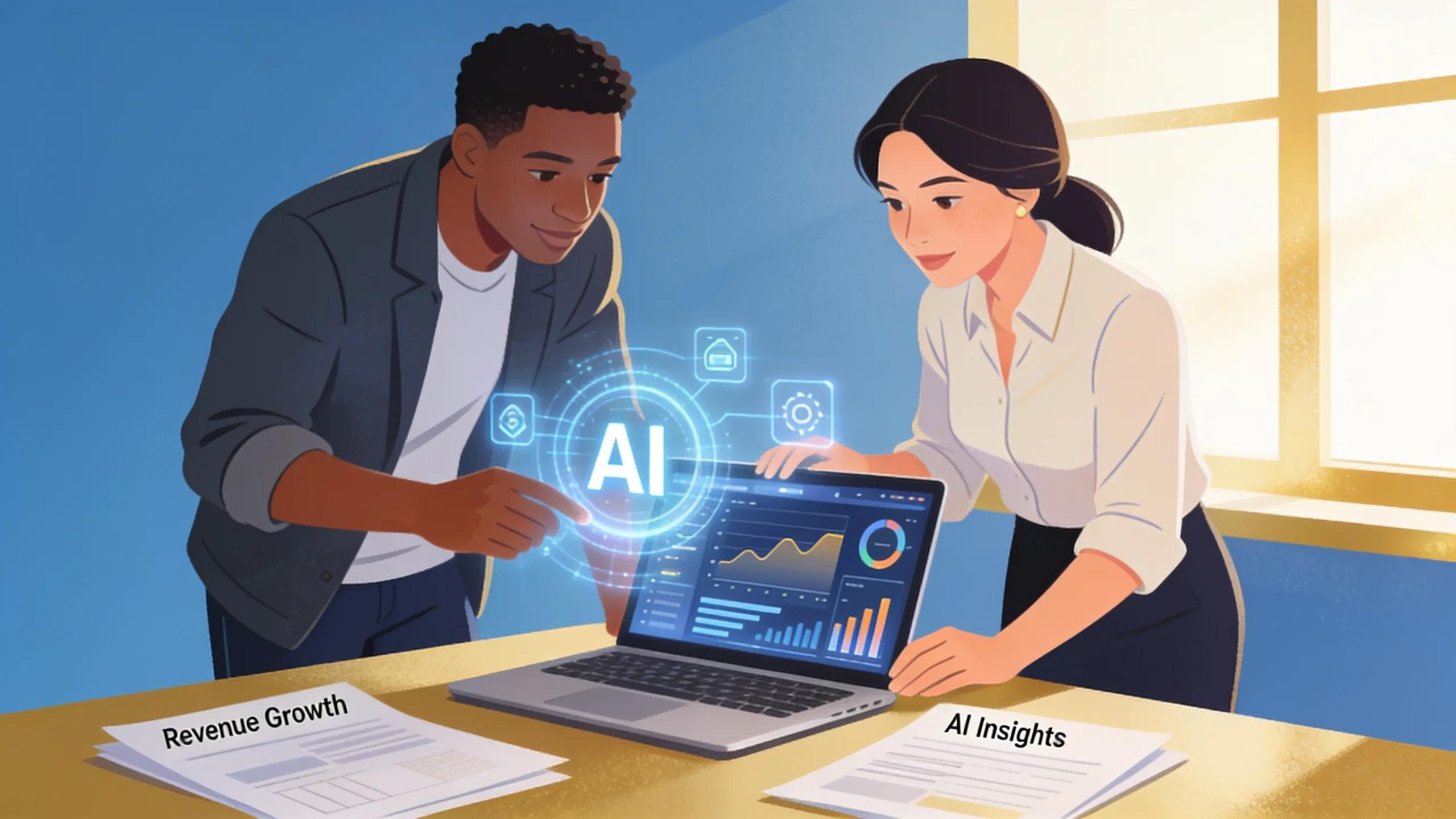

AI-driven Revenue Growth Strategies for Small Businesses Explained
By Justin Gray, Social Marketing Labs LLC
In the ever-evolving landscape of small business growth, leveraging artificial intelligence (AI) has become a game-changer. AI-driven revenue growth strategies enable small businesses to harness data for enhanced decision-making, automated operations, and improved customer engagement. This comprehensive guide will delve into various AI-driven marketing automation tools and their features. Readers will learn about the benefits of implementing AI solutions, practical applications, machine learning techniques, and the advantages of predictive analytics. Many small businesses face challenges in scaling efforts and achieving sustainable growth. Fortunately, by embracing AI-driven strategies, they can unlock greater efficiency and revenue potential. We will explore essential components and case studies demonstrating successful AI integrations within small businesses.
AI-driven marketing automation tools

AI-driven marketing automation tools streamline and enhance the capabilities of traditional marketing methods by employing sophisticated algorithms and data analysis. These tools function by automating repetitive tasks, improving lead generation, and providing in-depth insights into customer behaviors. The key benefit is that they allow small businesses to deploy more effective marketing campaigns without a significant increase in resources. As these tools become increasingly accessible, small businesses can take advantage of their features to enhance growth and customer relationships.
Features of AI Marketing Automation Tools
The landscape of AI marketing automation is rich with features designed to optimize the user experience and results. Here are some of the most significant attributes:
- User-Friendly Interface: Many AI tools prioritize intuitive interfaces, allowing teams to implement campaigns without extensive technical training.
- Integration Capabilities: These tools can seamlessly integrate with existing platforms, ensuring that data flows smoothly across systems.
- Automated Campaigns: Automated campaigns save time and ensure timely communication with customers, enhancing engagement.
- Predictive Analytics: Utilizing predictive analytics, businesses can forecast customer behavior and tailor marketing strategies accordingly.
Diving deeper into AI marketing tools, businesses can take advantage of specific solutions that further enhance their capabilities.
Benefits of AI Marketing Automation Tools
Using AI marketing automation tools provides numerous benefits that directly contribute to revenue growth:
- Time Savings: Automation reduces the time spent on repetitive tasks, freeing up resources for strategic planning.
- Predictable Revenue Growth: With data-driven strategies, businesses can anticipate leads and conversions more accurately.
- Cost Efficiency: By optimizing marketing efforts, AI tools help reduce unnecessary expenses.
- Enhanced Targeting: AI-driven segmentation ensures that marketing messages reach the right audience at the right time.
- Improved Campaign Performance: Real-time data allows for continuous tweaking and improvement of ongoing campaigns.
An effective AI-driven marketing strategy can significantly impact small businesses’ overall sales performance and operational efficiency. Organizations focus on providing tailored AI-enhanced marketing solutions for small to medium-sized businesses seeking sustainable revenue growth.
Practical Applications
Incorporating AI into marketing strategies can manifest in various practical applications that enhance overall efficiency:
- Email Marketing Automation: Automating email sequences based on user behavior can significantly increase open and conversion rates.
- Social Media Management: AI tools can analyze trends and optimize posts to drive engagement across various platforms.
- Lead Nurturing: AI can track and engage potential customers throughout their journey, guiding them toward conversion effectively.
As small businesses explore these applications, the potential to optimize their marketing efforts and ultimately drive revenue growth becomes ever more apparent.
AI-driven Revenue Growth Strategies
To build an effective AI-driven revenue growth framework, small businesses should consider the following strategies:
- Automation of Routine Tasks: This includes automating customer service requests and data management to reduce manual errors.
- Predictive Analytics: By employing predictive analytics, businesses can stay ahead of market trends, making informed decisions that lead to better outcomes.
- Data-Driven Decision Making: Integrating comprehensive data analysis allows for precise targeting and resource allocation.
These strategies provide a blueprint for implementing sustainable AI practices that can yield long-term benefits as businesses expand and adapt.
How Does AI Marketing Automation Drive Small Business Digital Growth?
AI marketing automation drives digital growth by enhancing the efficiency of marketing processes and improving customer interactions. By automating customer relationship management, small businesses can offer personalized experiences that resonate with their audience. This personalization boosts customer retention and loyalty, ultimately leading to increased sales and market share. Additionally, AI tools analyze vast amounts of data, delivering insights into consumer preferences that inform strategic adjustments. The result is a more streamlined and efficient approach to marketing that is responsive to real-time data and trends.
Which Machine Learning Techniques Enhance Marketing for SMBs?
Machine learning plays a pivotal role in modern marketing strategies for small and medium-sized businesses (SMBs). Some central techniques include:
- Predictive Analytics: This technique analyzes historical data to predict future customer behaviors, enabling targeted marketing efforts.
- Customer Segmentation: Machine learning algorithms can segment customers based on various parameters, allowing for tailored messages and offers.
- Automated Campaigns: By analyzing consumer behaviors, businesses can automate their marketing campaigns, ensuring they deliver content when customers are most likely to engage.
These techniques revolutionize how SMBs approach their marketing strategies by making them more data-driven and customer-centric.
How Can Predictive Analytics Improve Sales Forecasting for SMBs?
Predictive analytics enhances sales forecasting for small businesses by utilizing historical data to project future sales trends. By analyzing customer behaviors, purchasing patterns, and market conditions, businesses can create informed strategies that align with anticipated revenue goals. This technique allows for improved resource allocation and inventory management, ensuring that businesses are prepared to meet demand without excess costs. Implementing predictive analytics equips small businesses with the knowledge necessary to adapt to changing market dynamics and customer needs efficiently.
What Are the Benefits of Using Predictive Analytics for Revenue Growth?
The integration of predictive analytics specifically tailored for revenue growth offers substantial benefits:
- Increased Efficiency: Streamlined operations lead to optimal use of resources and reduced operational costs.
- Enhanced Customer Engagement: By understanding customer needs and behaviors, businesses can enhance their marketing messages for targeted engagement.
- Improved ROI: Accurate forecasting enables better investment decisions, maximizing the return on marketing expenditures.
By embracing these benefits, small businesses can solidify their revenue growth strategies and enhance their decision-making processes.
Which Tools Support Predictive Sales Analytics in SMB Marketing?
Several tools support predictive sales analytics, enabling small businesses to leverage data effectively. Notable examples include:
- HubSpot: Offers comprehensive marketing automation with built-in predictive analytics features to enhance customer engagement.
- Mailchimp: Provides email campaigns that incorporate predictive analytics for more effective marketing outreach.
- Salesforce: Advanced analytics and customer relationship management capabilities allow businesses to identify trends and forecast sales accurately.
Utilizing these tools empowers small businesses to implement effective predictive analytics and improve their marketing strategies.
What Are Effective Automated Lead Generation Strategies Using AI?
Automated lead generation strategies utilizing AI have proven to be beneficial for small businesses looking to maximize outreach with minimal effort. Key strategies include:
- AI-Powered Chatbots: These can engage potential customers in real-time, addressing queries and qualifying leads before handing them off to sales teams.
- Content Recommendations: By analyzing user behavior, businesses can automatically suggest content tailored to specific visitor interests, increasing engagement and leads.
- Email Targeting Algorithms: AI can analyze historical data to send personalized emails that resonate with specific customer segments, enhancing lead conversion rates.
These automated strategies not only improve lead generation efforts but also help maintain high levels of customer engagement.
How Does AI Personalize Customer Acquisition for Small Businesses?

AI personalizes customer acquisition by analyzing data from various sources and tailoring marketing efforts to meet individual preferences. This involves:
- Automated Lead Scoring: Using algorithms to assess lead quality based on predicted engagement.
- Predictive Analytics: Anticipating customer needs and delivering the right message at the right time.
- Personalized Email Campaigns: Crafting emails that reflect individual customer behavior and preferences for higher engagement.
Through personalized outreach, small businesses can create strong initial connections that lead to lasting customer relationships.
Which AI Tools Optimize Sales Funnels for SMBs?
To optimize sales funnels, small businesses should consider the following AI tools:
- Optimizely: This platform employs AI to A/B test various elements, constantly improving users’ journey towards conversion.
- PandaDoc: Automates the proposal process, enabling sales teams to generate documents based on customer data.
- Hotjar: Provides insights into user behavior on websites, assisting in visualizing where potential customers drop off in the sales funnel.
By integrating these tools, SMBs can refine their sales funnels to improve customer acquisition and retention effectively.
How to Build an AI-Powered Marketing System for Sustainable SMB Revenue Growth?
Building an AI-powered marketing system involves several strategic steps:
- Identify Objectives: Outline clear marketing goals that align with business objectives.
- Select the Right Tools: Choose AI tools that support your identified objectives, such as marketing automation platforms or analytics software.
- Implement and Monitor: Roll out the selected tools while continuously monitoring their performance to ensure alignment with goals.
By following these steps, small businesses can establish robust, scalable marketing systems that promote sustainable revenue growth.
What Are the Key Components of AI Marketing Automation Systems?
AI marketing automation systems typically consist of several key components:
- Data Management: Centralized databases store customer data, ensuring accessibility for analysis and campaign planning.
- User Interface: Intuitive interfaces allow marketing teams to implement campaigns with ease and track performance metrics.
- Analytics Capabilities: Tools analyze campaign data, providing insights that inform strategic decision-making.
These components work in tandem to create an efficient marketing process that leverages AI for impactful results.
Which Steps Implement Scalable AI Revenue Growth Solutions?
Implementing scalable AI revenue growth solutions requires careful planning and execution:
- Define Clear Objectives: Establish what you aim to achieve using AI technologies.
- Choose the Right Tools: Select appropriate AI tools that provide necessary functionalities for your business needs.
- Monitor and Adjust: Continuously assess the impact of the implemented solution and adjust strategies as necessary to optimize results.
Following these steps helps small businesses harness AI capabilities for scalable growth.
What Are Real-World Case Studies Showing AI-driven Revenue Growth for SMBs?
Several small businesses have successfully implemented AI-driven strategies to boost revenue. Notable examples include:
- Coffee Co.: Implemented AI-driven customer segmentation, leading to a significant increase in engagement and a rise in sales.
- Bookstore X: Utilized predictive analytics for better inventory management, resulting in a reduction in excess stock.
- Local Gym: Employed automated email marketing that increased client retention rates significantly within a year.
These case studies exemplify how integrating AI can lead to significant revenue growth and operational improvements in real-world contexts.
Which Success Metrics Demonstrate AI Marketing Impact?
To gauge the success of AI marketing initiatives, businesses should consider the following metrics:
- Customer Acquisition Cost: The total cost of acquiring a new customer through AI-driven campaigns.
- Return on Marketing Investment: The revenue generated for every dollar spent on marketing efforts.
- Conversion Rates: The percentage of potential customers who complete a desired action as a result of marketing initiatives.
By tracking these metrics, small businesses can better understand the effectiveness of their AI strategies and make necessary adjustments.
How Have Small Businesses Used AI to Increase Customer Retention?
Small businesses have successfully leveraged AI to enhance customer retention through various strategies:
- Personalized Marketing: Tailoring communications based on customer preferences and past interactions increases engagement.
- Feedback Analysis: Utilizing AI to analyze customer feedback can help businesses identify areas for improvement, fostering loyalty.
- Loyalty Programs: AI-driven loyalty programs that predict customer behavior keep customers engaged by rewarding them effectively.
These techniques ensure businesses maintain strong relationships with their customers, leading to higher retention rates.
What Are Common Challenges and Solutions in AI-driven SMB Revenue Growth?
Despite its benefits, implementing AI in small businesses comes with challenges, which include:
- Limited Budgets: Small businesses may struggle to allocate adequate funds for AI solutions.
- Fragmented Systems: Existing legacy systems may be incompatible with new AI technologies.
- Lack of Technical Resources: Small teams may lack the necessary expertise to effectively implement and manage AI tools.
By addressing these hurdles—such as seeking cost-effective solutions and investing in training—businesses can successfully integrate AI-driven strategies into their operations.
How to Overcome Barriers to AI Marketing Adoption in Small Businesses?
Overcoming barriers to AI marketing adoption requires a proactive approach, including:
- Automate Repetitive Tasks: Streamlining operations through automation reduces resistance to changing processes.
- Enhance Audience Targeting: Educating teams on how AI improves targeting can demonstrate its value.
- Invest in Training: Providing staff with the necessary training ensures they are equipped to leverage AI benefits effectively.
Implementing these strategies supports businesses in transitioning to an AI-driven marketing landscape with greater ease.
Which Best Practices Ensure Successful AI Automation Integration?
To facilitate successful AI automation integration, consider these best practices:
- Start Small: Begin with a pilot program or small-scale implementation to test effectiveness before scaling.
- Invest in Training: Ensure that your team understands how to use new tools effectively through training and resources.
- Monitor and Adjust: Regularly assess the performance of AI initiatives to make timely adjustments that enhance outcomes.
Adhering to these best practices will increase the likelihood of successful AI integration for small businesses aiming to enhance their marketing efforts and drive growth.

justin
Contributor