
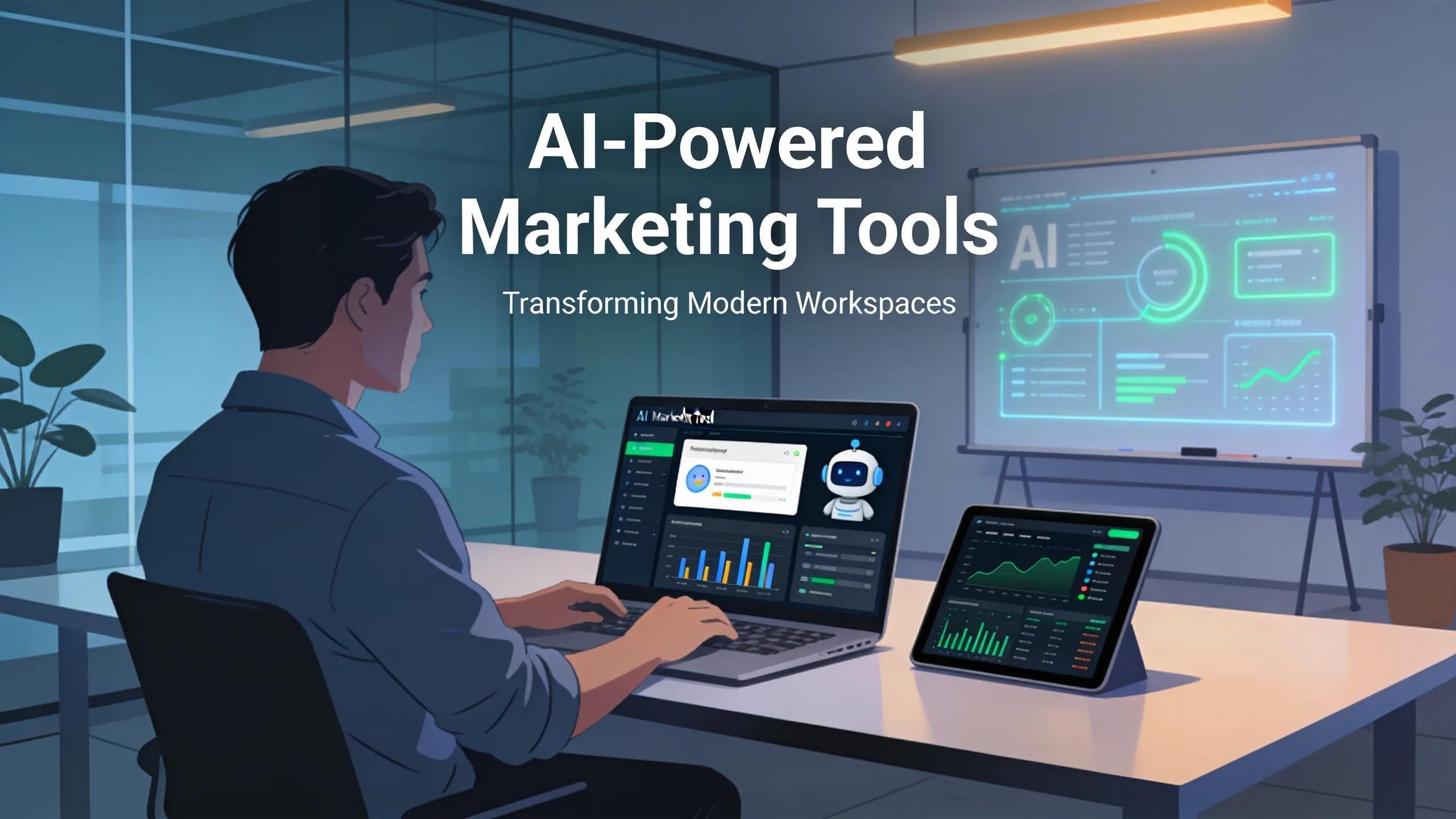

AI Marketing Tools for Small Business: Proven Digital Strategies to Boost Growth
By Justin Gray, Social Marketing Labs LLC
In an increasingly competitive market, small businesses must leverage advanced technology to enhance their marketing efforts. AI-driven digital marketing strategies provide an innovative approach that optimizes processes, reduces costs, and increases customer engagement. By harnessing automation and predictive analytics, small businesses can target their marketing efforts more effectively, ultimately driving revenue growth. This article explores various AI marketing strategies tailored for small businesses, highlighting their benefits and practical implementation methods. Key sections include understanding the transformation brought by AI automation, identifying the best tools available, measuring ROI, and overcoming common challenges in implementation.
What Are AI-Driven Digital Marketing Strategies for Small Businesses?
AI-driven digital marketing strategies encompass various practices that leverage artificial intelligence for optimizing marketing campaigns. These strategies aim to automate processes, analyze data, and enhance customer interactions, ultimately leading to improved efficiency and effectiveness in marketing endeavors. For small businesses, implementing these AI strategies can be particularly beneficial, allowing them to compete with larger companies by utilizing cost-effective tools that deliver significant returns.
Understanding how AI can assist in areas such as customer segmentation, personalized marketing, and automated content creation is vital. By deploying these technologies, small businesses can create targeted marketing efforts that resonate with their audience more profoundly, leading to improved engagement and conversion rates.
This approach aligns with current research focusing on the impact of AI on digital marketing transformation for SMEs.
AI’s Impact on Digital Marketing Transformation for Nigerian SMEs
Purpose: This study examines the impact of Artificial Intelligence (AI) on Digital Marketing Transformation among Nigerian Small and Medium Enterprises (SMEs). Specifically, it evaluates how AI-driven customer relationship management (CRM) systems enhance digital marketing and investigates how AI-based decision-making relates to marketing transformation.Methods: The study employed a descriptive survey research design in Lagos State, Nigeria’s commercial and technological hub. Digital marketing transformation through artificial intelligence: A study of Nigerian small businesses, 2025
How Does AI Automation Transform Small Business Marketing?

AI automation significantly transforms small business marketing by streamlining previously manual tasks and enabling data-driven decision-making. Automated systems save valuable time while enhancing targeting efficiency. For example, AI tools can analyze vast amounts of customer data to formulate effective segmentation strategies, allowing businesses to tailor their messaging for specific audiences.
Moreover, real-time analytics facilitate agile responses to market changes, ensuring that small businesses remain relevant and competitive. As these tools evolve, they provide increasing opportunities for personalization in marketing, which is vital in today’s consumer-focused marketplace.
Which Revenue Growth Outcomes Result from AI Marketing?
Successfully integrating AI marketing strategies can lead to measurable revenue growth outcomes. These outcomes include:
- Increased Customer Engagement: AI tools create personalized experiences that resonate with consumers, promoting higher interaction rates.
- Reduced Customer Acquisition Costs: By targeting the right audience with optimized messaging, businesses can lower the costs associated with gaining new customers.
- Improved ROI: The automation of marketing processes often leads to higher returns on investment due to enhanced efficiency and decreased manual labor.
These measurable outcomes underscore the value of adopting AI-driven marketing practices, which not residential only enhance current strategies but also position businesses for sustainable growth.
Which Top AI Marketing Tools and Platforms Are Best for Small Businesses?
There is a plethora of AI marketing tools available that cater specifically to the needs of small businesses. Some of the top platforms include:
- HubSpot: Well-known for its CRM capabilities, HubSpot offers robust marketing automation features that help small businesses manage campaigns effectively.
- Mailchimp: A leader in email marketing, Mailchimp utilizes AI to optimize send times and content, improving engagement metrics.
- Hootsuite: This platform allows small businesses to automate their social media marketing campaigns while providing analytics to measure performance.
These tools are designed with usability in mind, enabling small business teams to implement effective marketing strategies without extensive training or resources.
What Features Define Automated Marketing Software for SMBs?
When evaluating automated marketing software, certain features are crucial for small to medium businesses (SMBs):
- User-Friendly Interfaces: An intuitive design can significantly reduce the learning curve for small business teams.
- Integration Capabilities: The ability to seamlessly integrate with existing systems ensures smoother operations.
- Analytics and Reporting: Features that facilitate performance tracking and insights into marketing campaigns provide essential data for continuous improvement.
These functionalities enhance the effectiveness of marketing efforts, ensuring that businesses can harness the full potential of automation.
How Do Machine Learning and Predictive Analytics Enhance Customer Targeting?
Machine learning and predictive analytics stand at the forefront of enhancing customer targeting strategies for small businesses. Machine learning algorithms can analyze customer behavior patterns and preferences, identifying trends that humans may overlook. This information is invaluable for creating highly personalized marketing content that speaks directly to individual needs.
Furthermore, predictive analytics allows businesses to anticipate customer actions based on historical data, making it possible to craft preemptive marketing strategies that enhance customer satisfaction and loyalty. Small businesses leveraging these technologies can significantly boost their marketing effectiveness and improve overall customer experiences.
This perspective is supported by research demonstrating how SMEs can leverage predictive analytics to optimize their marketing strategies.
Optimizing SME Marketing with Predictive Analytics
In the modern business landscape, data and analytics are playing an increasingly pivotal role in decision making across all sectors. Small and medium sized enterprises (SMEs) constitute a major portion of the economic fabric in the United States, yet many struggle with limited resources and an inability to leverage insights from customer and market data at their disposal. This study seeks to explore how SMEs operating in various industries across the US can optimize their marketing strategies through the application of predictive analytics techniques. Leveraging predictive analytics to optimize sme marketing strategies in the US, AM Abdul-Yekeen, 2024
How Can Small Businesses Use AI for Effective Digital Marketing Automation?
For small businesses embarking on AI-driven marketing automation, it is essential to define clear goals for their strategies, such as increasing engagement, driving conversions, or improving customer retention. Starting with small AI projects helps businesses gradually integrate more sophisticated strategies.
Additionally, utilizing readily available tools that offer AI functionalities allows SMBs to transition away from manual processes while maintaining control over their marketing efforts.
What Are Key AI Strategies for Social Media and Email Marketing Automation?
Effective AI strategies for social media and email marketing automation include:
- Automated Email Sequences: Crafting tailored content that is automatically sent based on user interactions can nurture leads effectively.
- Social Media Scheduling: Automated scheduling tools ensure consistent brand messaging across platforms while optimizing posting times for maximum visibility.
- Personalization Techniques: Utilizing customer data to deliver tailored content boosts engagement rates significantly.
Implementing these strategies enables businesses to maintain an active presence while automating routine tasks.
How to Implement AI-Driven Content Marketing Systems for SMBs?
Implementing AI-driven content marketing systems involves several critical steps. Initially, businesses must identify their content marketing goals, whether it’s brand awareness, lead generation, or customer education. Next, selecting appropriate AI tools that meet those specific goals is vital for smooth integration.
Automating content analysis allows businesses to continuously improve their strategies based on performance metrics, ensuring that content remains relevant and effective. This process fosters long-term success in attracting and engaging target audiences.
How Do You Measure ROI and Success of AI Marketing Systems in Small Businesses?
Measuring the ROI and success of AI marketing systems hinges on the identification of relevant key performance indicators (KPIs). These may include metrics such as customer lifetime value (LTV), customer acquisition cost (CAC), and return on advertising spend (ROAS). Tracking these KPIs through analytics tools allows businesses to gauge the effectiveness of their AI-driven initiatives.
Incorporating regular reporting facilitates data-driven decision-making, enabling small businesses to optimize their strategies for improved outcomes.
Which KPIs Track AI Marketing Performance and Revenue Impact?
Tracking AI marketing performance requires attention to specific KPIs that reflect both effectiveness and overall financial impact, such as:
- Customer Lifetime Value (LTV): Understanding the total revenue generated from a customer relationship can inform retention strategies.
- Customer Acquisition Cost (CAC): This metric assesses the expense incurred to gain a new customer, helping businesses refine their marketing budgets.
- Return on Advertising Spend (ROAS): Evaluating the financial return on advertising efforts enables businesses to allocate resources more effectively.
These KPIs provide essential insights for small businesses, allowing them to measure the impact of their AI-driven marketing strategies.
What Case Studies Demonstrate AI Marketing Benefits for SMBs?

Numerous case studies highlight the effectiveness of AI marketing strategies for small businesses. For instance, a local bakery implemented an AI-driven email campaign that personalized offers based on customer purchase history, resulting in a reported increase in repeat sales. Similarly, an online retail store utilized predictive analytics to refine its ad targeting, leading to an increase in conversion rates.
These examples demonstrate the impact AI can have on driving revenue and fostering customer loyalty in small business settings.
What Are Common Challenges and How to Apply AI Marketing Solutions for Your Small Business?
While AI marketing presents significant advantages, common challenges include data privacy concerns, the complexity of integration, and the need for employee training. Small businesses should prioritize transparent data practices to build customer trust while ensuring compliance with regulations.
Implementing phased training programs can facilitate employee adaptation to new tools and processes without overwhelming them, enabling a smoother transition to AI-driven marketing tactics. By addressing these challenges, businesses can harness the full potential of AI.
How to Overcome Implementation Barriers in AI Marketing Automation?
Overcoming implementation barriers in AI marketing involves adopting strategic practices, such as:
- Beginning with Small Projects: This approach allows businesses to test AI solutions without risking significant resources.
- Team Training and Education: Engaging in ongoing education ensures that staff feel confident and competent with the new systems.
- Selecting User-Friendly Tools: The right software can make or break the implementation process; choosing platforms that are easy to navigate contributes significantly to overall success.
These strategies help small businesses effectively integrate AI technologies, paving the way for future growth.
Where Can Small Businesses Apply for AI-Driven Marketing Programs?
Small businesses seeking AI-driven marketing solutions can explore various resources, such as industry-specific associations, partner programs with software providers, or local government initiatives aimed at supporting small businesses in adopting technology. Engaging with community resources can provide guidance on navigating available tools and services tailored to their specific needs.
Ultimately, small businesses that leverage AI-driven marketing strategies stand to gain substantial advantages in today’s digital environment, transforming their marketing capabilities and paving the way for sustained success.

justin
Contributor